








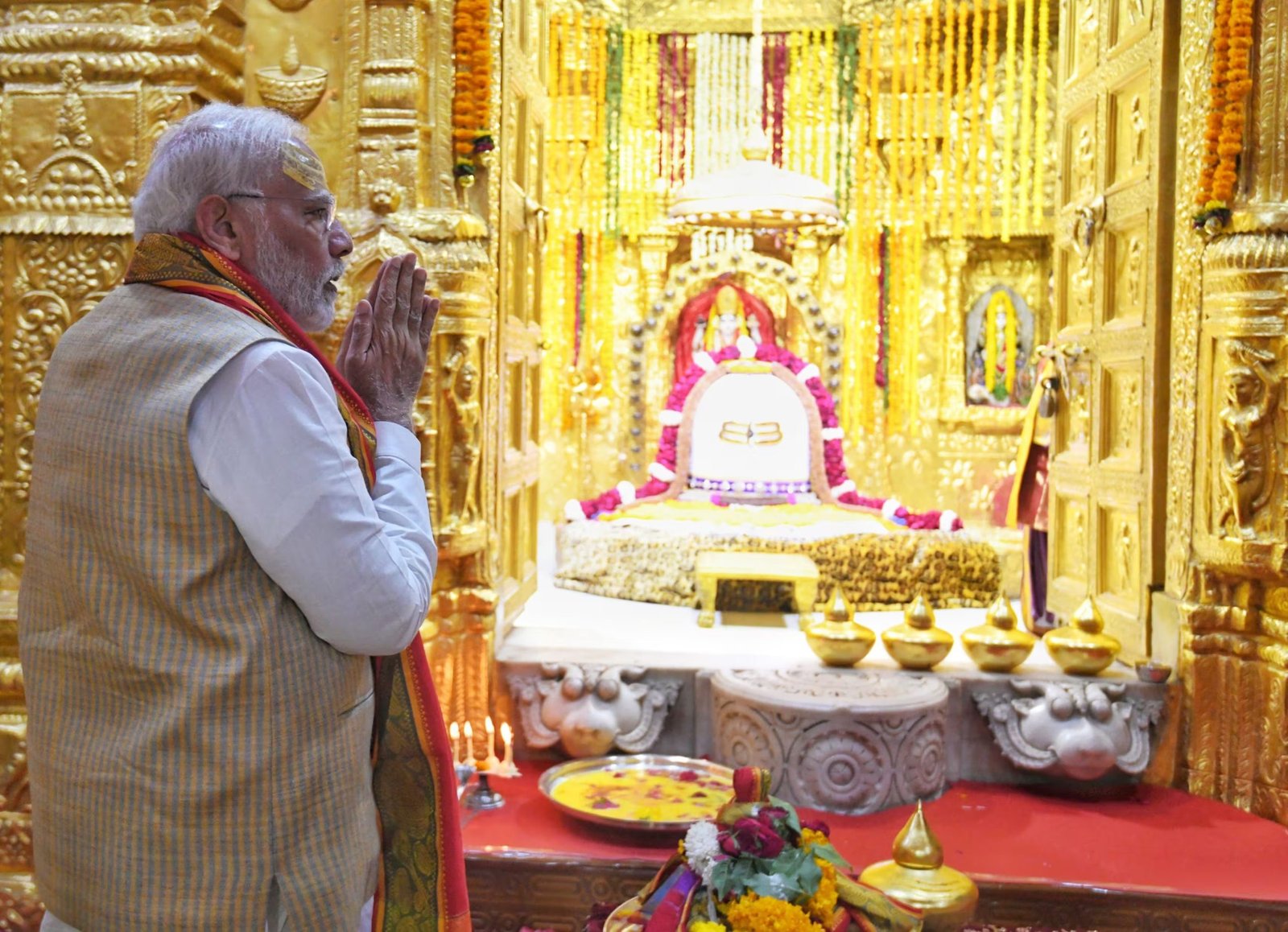
Prime Minister Narendra Modi on Tuesday launched the Somnath Swabhiman Parv, a commemorative event marking 1,000 years since the first recorded attack on the Somnath Temple by Mahmud of Ghazni in 1026. The multi-day event, running through January 11, seeks to highlight the enduring spiritual, cultural, and historical significance of Somnath, one of Hinduism’s twelve sacred Jyotirlingas located at Prabhas Patan in Gujarat.
The observance positions Somnath not merely as a place of worship, but as a powerful symbol of civilisational continuity, resilience, and collective memory, shaped by centuries of destruction and reconstruction.
Historical Context and Enduring Significance
The Somnath Temple has been attacked and destroyed multiple times over the centuries, yet it has been rebuilt repeatedly by local rulers, devotees, and community leaders. Each reconstruction reflected the prevailing social and political resolve to preserve cultural identity amid adversity.
Following India’s independence, the modern reconstruction of the temple was initiated through public contributions and completed in 1951. The consecration ceremony saw then President Dr. Rajendra Prasad install the sacred lingam, while Sardar Vallabhbhai Patel played a key role in mobilising support for the project. Importantly, the reconstruction was funded entirely through public donations, reinforcing its status as a people-led cultural revival.
Public Participation and Cultural Stewardship
In messages shared during the launch, Prime Minister Modi invoked Sanskrit hymns and emphasised the role of collective faith and public participation in preserving cultural heritage. He described Somnath as a living testimony to India’s civilisational strength, shaped not by state patronage alone but by sustained community commitment.

The Swabhiman Parv encourages citizens to reflect on the historical journey of Somnath and share memories, narratives, and experiences associated with the temple, strengthening intergenerational cultural awareness.
Reviving Historical Debate on State and Religion
The commemoration has also revived discussions around the role of the state in matters of religion and heritage. Historical correspondence from 1951, including letters written by then Prime Minister Jawaharlal Nehru, has resurfaced in public discourse. In these letters, Nehru expressed concerns about state involvement in religious institutions, citing the importance of maintaining secular principles.
While leaders from the Bharatiya Janata Party have cited these letters as evidence of opposition to the temple’s reconstruction, Congress leaders have clarified that Nehru supported the rebuilding through private and public efforts, rather than direct state sponsorship. The debate underscores the complexity of balancing secular governance with cultural preservation in a pluralistic society.
Somnath as a Contemporary National Symbol
Today, the Somnath Temple stands as one of India’s most visited pilgrimage sites, attracting millions of devotees and tourists each year. Beyond its religious importance, it has emerged as a symbol of national pride and cultural endurance, often referenced in discussions on heritage conservation and identity.
The Somnath Swabhiman Parv seeks to reinforce this symbolism by connecting historical memory with contemporary cultural consciousness, framing the temple as a shared national legacy rather than a sectarian monument.
Heritage, Identity, and the Way Forward
The launch of the Swabhiman Parv reflects a broader emphasis on heritage-led narratives in public discourse. Advocates argue that recognising historical resilience strengthens cultural confidence, while critics caution against politicisation of history.
As the event continues, it highlights the need for balanced engagement with the past—one that honours faith and history while remaining aligned with constitutional values and social harmony. Somnath’s story, shaped by resilience and renewal, remains central to this ongoing dialogue.