










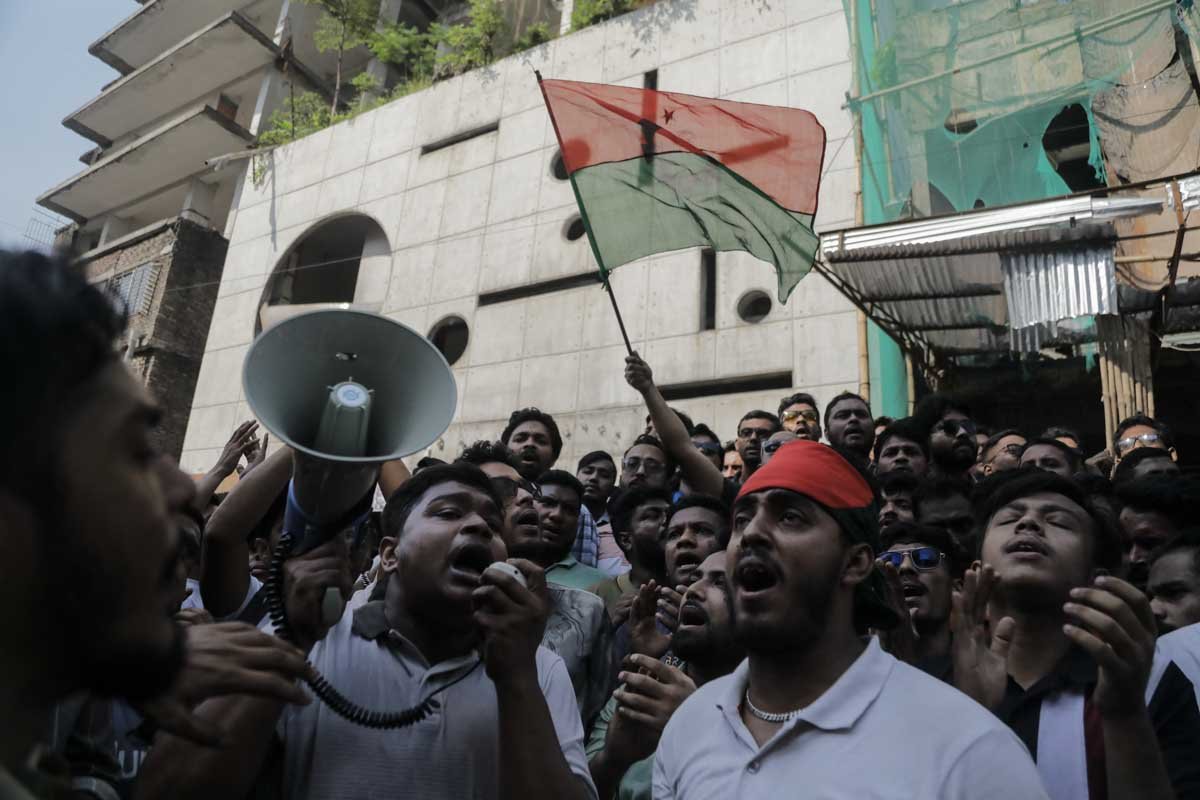
Amid continuing unrest in Bangladesh, a lynching incident reported during protests has sparked widespread concern over public safety, mob violence, and the erosion of due process. According to local media reports, the victim has been identified as Dipu Chandra Das, whose death occurred in the backdrop of heightened social tensions. The incident has once again drawn attention to the dangers posed by vigilantism and the urgent need for lawful intervention by authorities during periods of instability.
Citing local and eyewitness sources, Bangladeshi Bengali news outlet Barta Bazar reported that the incident was triggered by allegations that Dipu Chandra Das had made derogatory remarks about Islam and Prophet Muhammad. These alleged comments were reportedly made during an event organised at a factory to mark World Arabic Language Day. However, as of now, there has been no official confirmation from authorities regarding the allegations or the exact circumstances leading to the fatal violence.
Escalation of Tensions and Absence of Due Process
According to reports, tensions escalated rapidly following the accusations, culminating in mob violence. Legal experts have repeatedly emphasised that allegations—regardless of their nature—must be examined through established legal procedures rather than being acted upon by crowds. The absence of due process in such cases undermines the foundations of justice and risks normalising violence as a response to accusations.
The incident underscores the dangers of misinformation, heightened emotions, and lack of immediate intervention, all of which can contribute to tragic outcomes during moments of unrest.
Concerns Over Mob Violence and Public Safety
The lynching has renewed broader concerns about mob justice in South Asia, where instances of collective violence have, in recent years, raised alarm among human rights observers. Such incidents not only result in loss of life but also weaken public confidence in institutions meant to uphold law and order.

Civil society groups have stressed that preventing mob violence requires swift law enforcement response, effective communication, and strong legal consequences for those involved in unlawful acts.
Minority Safety in Periods of Unrest
The incident has also brought renewed focus on the safety of minority communities during periods of political or social instability. Rights advocates argue that safeguarding every citizen, irrespective of religious or social identity, is a core responsibility of the state.
Observers note that failure to address such incidents transparently can deepen mistrust and social divisions, further complicating efforts to restore calm and stability.
Need for Transparent Investigation and Accountability
Authorities are expected to investigate the circumstances surrounding the lynching, including the role of crowd mobilisation, the spread of unverified allegations, and the response of local law enforcement. Legal accountability, experts argue, is essential not only to deliver justice in this case but also to deter future incidents of mob violence.
Transparent investigation and timely communication from authorities are seen as critical steps in reinforcing public confidence and ensuring that justice is delivered through lawful means.
Broader Implications for Governance and Rule of Law
The killing of Dipu Chandra Das comes at a time when Bangladesh is navigating complex social and political challenges. Analysts warn that unchecked mob violence risks undermining governance, destabilising public order, and damaging the country’s human rights record.
Strengthening institutional responses, ensuring swift justice, and reaffirming commitment to the rule of law remain crucial to preventing similar incidents in the future.
As Bangladesh continues to grapple with unrest, the lynching incident serves as a stark reminder of the consequences of allowing accusations to bypass legal scrutiny. Upholding the rule of law, protecting citizens from collective violence, and ensuring accountability are essential for maintaining social harmony and public trust.
The coming days will be crucial in determining how institutions respond and whether justice is delivered in a manner consistent with democratic principles and human rights.