










In a bold escalation of counter-terrorism operations, security forces demolished the family home of Dr Umar Nabi, the Pulwama-based doctor identified as the driver of the explosive-laden Hyundai i20 that detonated near Delhi’s Red Fort on November 10, 2025, killing 13 people and injuring over 20 others, during an overnight raid in Quil village of Jammu and Kashmir’s Pulwama district. The controlled demolition, executed using an improvised explosive device (IED) as a symbolic deterrent against militancy, was confirmed by officials and comes just days after DNA analysis matched Nabi’s remains from the blast site with samples from his mother, solidifying his role in what the Union government has officially termed a “heinous terrorist incident.” This action, part of a broader crackdown on terror enablers, underscores the authorities’ commitment to dismantling support networks for radicalized individuals, particularly those infiltrating professional spheres like medicine, and serves as a stark warning to families harboring or aiding such elements in the volatile Kashmir valley where Pulwama has long been a hotbed for insurgent activities linked to groups like Jaish-e-Mohammed (JeM).
Multi-Agency Probe Expands: Detentions in UP and Links to Radicalised Doctors
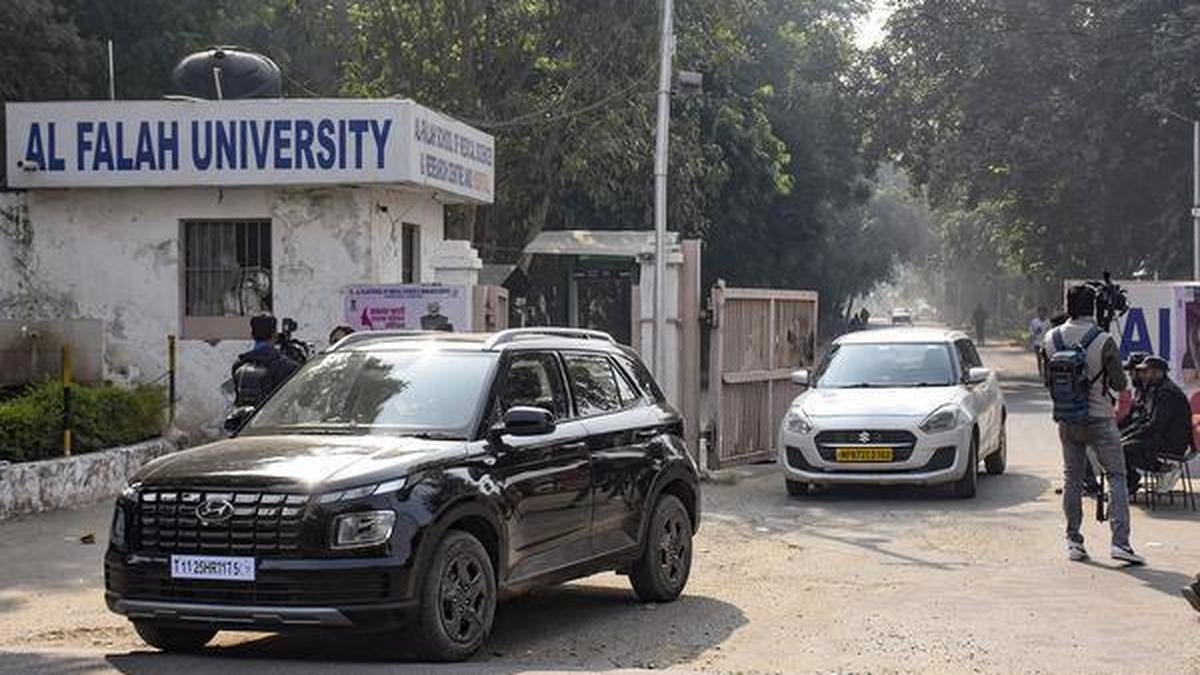
The National Investigation Agency (NIA), which took over the probe on November 11, 2025, following directives from the Ministry of Home Affairs, has intensified its efforts to connect the dots across multiple states, with two additional suspects a medical college professor and a postgraduate student from Jammu and Kashmir detained in Uttar Pradesh on November 13 for their alleged ties to the blast. These arrests follow the earlier apprehension of three other doctors Muzammil Ahmad Ganaie from Pulwama, Adeel Majeed Rather from Kulgam, and Shaheen Sayeed from Lucknow who were part of a “white-collar” terror module operating under the guise of medical professionals at Al-Falah University and Hospital in Faridabad, Haryana. Investigators believe Nabi, an assistant professor at the same institution, pooled cash with these associates to procure ammonium nitrate-based explosives (over 2,900 kg seized in raids), planning serial blasts in Delhi, Ayodhya, Prayagraj, and Srinagar timed around December 6 the Babri Masjid demolition anniversary for maximum symbolic impact. The UP detentions, based on digital footprints and call records linking the suspects to Pakistani handlers via Telegram groups, highlight the module’s transnational reach and the urgent need for enhanced surveillance in sensitive sectors like healthcare, where radicalisation can exploit professional mobility to evade detection.
Al-Falah University Under Scrutiny: Forensic Audit to Uncover Funding and Radicalisation Trails
In a significant development, the Union government has ordered a comprehensive forensic audit of all financial, academic, and operational records of Al-Falah University in Faridabad, where Nabi and the arrested doctors either studied or worked, aiming to expose potential lapses in oversight that allowed a JeM-affiliated cell to flourish within its premises. The audit, involving the Enforcement Directorate (ED) and other financial intelligence agencies, will scrutinise funding sources, student vetting processes, and procurement of controlled substances like ammonium nitrate used in the blast, following the recovery of explosive residues, incriminating diaries, and communication devices from campus raids. The university, established in 2014 and recently facing a show-cause notice from the National Assessment and Accreditation Council (NAAC) for lapsed accreditation claims, has suspended its website and denied allegations, but investigators suspect it unwittingly provided cover for the module’s activities, including radicalisation through online channels connected to handlers in Pakistan, Turkiye, and Afghanistan. This institutional probe reflects a proactive governance approach to fortify educational environments against extremist infiltration, ensuring accountability from private entities that receive public funds or tax benefits while prioritising national security over administrative complacency.
Broader Implications: NIA’s Multi-State Operation and Public Safety Measures
The NIA’s investigation, spanning Kashmir, Haryana, Delhi, and Uttar Pradesh, has uncovered a sophisticated network of eight suspects predominantly radicalised medical professionals, who planned vehicle-borne IED attacks reminiscent of past JeM operations, with Nabi’s premature detonation possibly triggered by mounting pressure from raids that began on October 30, 2025. Home Minister Amit Shah reviewed the case with the National Security Advisor and top officials on November 13, directing enhanced border surveillance, anti-radicalisation drives, and legislative tightening on terror financing, while Prime Minister Narendra Modi visited survivors at LNJP Hospital, vowing justice and national unity. Security has been beefed up around Pragati Maidan for the India International Trade Fair starting November 14, and a suspicious Maruti Brezza linked to the module was recovered from the university campus. This incident, evoking memories of the 2019 Pulwama attack, demands a balanced response: rigorous enforcement without overreach, fostering community trust through deradicalisation programs while holding institutions like Al-Falah accountable for vetting and transparency.
Path to Justice: Strengthening India’s Counter-Terrorism Framework
As the death toll rises to 13 with another victim succumbing to burns, the Red Fort blast serves as a grim reminder of terrorism’s evolving tactics blending professional facades with ideological extremism and calls for systemic reforms, including mandatory background checks in sensitive professions, fortified explosive controls, and international cooperation without compromising sovereignty. The Pulwama demolition and Al-Falah audit exemplify assertive action, but long-term public welfare hinges on preventive intelligence, community engagement, and equitable governance to address root causes like radicalisation in underserved regions. With NIA’s probe gaining momentum, India stands resolute in pursuing justice, ensuring such tragedies become relics of the past through vigilant, accountable leadership.