









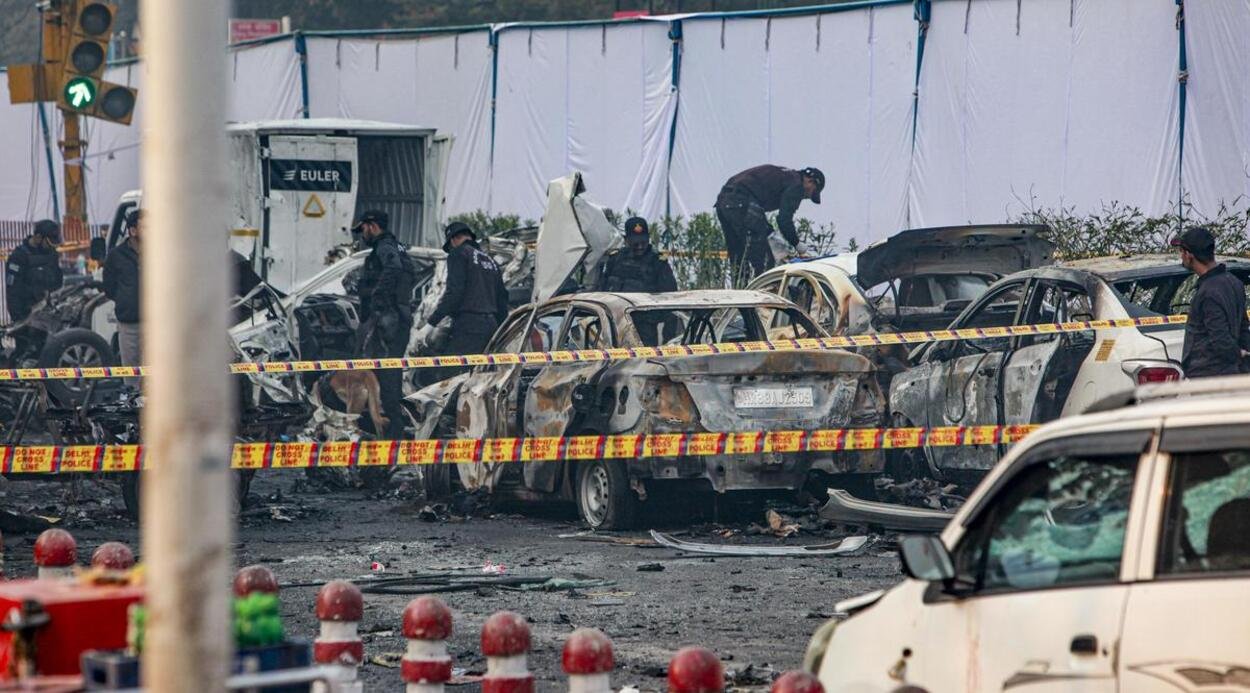
A suicide car bomb exploded near Delhi’s iconic Red Fort on November 10, 2025, shattering the evening calm and claiming 13 lives while injuring more than 20 others in a brazen act of terrorism. DNA tests have confirmed the attacker as Dr. Umar Un Nabi, a 36-year-old doctor from Pulwama, Kashmir, who drove a white Hyundai i20 laden with ammonium nitrate-based explosives into the blast site. This incident has unveiled a chilling Jaish-e-Mohammed (JeM) conspiracy involving eight suspects, predominantly radicalized medical professionals, who plotted coordinated serial blasts across major Indian cities including Delhi, Ayodhya, Prayagraj, and Srinagar. The government’s swift response, led by Prime Minister Narendra Modi and Home Minister Amit Shah, includes a nationwide National Investigation Agency (NIA) probe, underscoring a commitment to dismantling terror networks and ensuring public accountability in the face of evolving threats.
Unraveling the Jaish-e-Mohammed Plot: From Radicalization to Execution
The investigation reveals a sophisticated “white-collar” terror module orchestrated from Al Falah University in Faridabad, Haryana, where traces of explosives and digital footprints linked to Pakistani handlers were discovered. Dr. Un Nabi, part of this network alongside associates like Dr. Muzammil Shakeel and Dr. Adil Rather, was radicalized through Telegram groups operated by JeM operatives in Pakistan, with additional connections to handlers in Turkiye and Afghanistan. The plot, initially slated for August but delayed, aimed for execution around December 6, 2025—the anniversary of the Babri Masjid demolition—to maximize symbolic impact. Authorities recovered over 2,900 kg of ammonium nitrate explosives from related raids, highlighting the module’s intent for vehicle-borne improvised explosive device (IED) attacks reminiscent of past JeM operations. This exposure demands rigorous scrutiny of radicalization pathways within educational institutions, emphasizing the need for proactive intelligence and institutional reforms to prevent such infiltrations.
Role of Al Falah University in the Terror Network
Al Falah University has emerged as the nerve center of the conspiracy, with police uncovering explosive residues, incriminating diaries, and communication devices on campus that tie directly to cross-border directives. The institution, which employed several suspects including Un Nabi, now faces a government-ordered comprehensive audit of its funding sources, operational protocols, and student vetting processes. Investigators suspect the university unwittingly—or perhaps negligently—provided cover for the module’s activities, including procurement of controlled substances like ammonium nitrate under the guise of legitimate research. Prime Minister Modi’s directive for a thorough probe reflects a zero-tolerance stance on any institutional complicity, calling for enhanced regulatory oversight to safeguard educational environments from extremist influences. This incident reinforces the urgency for balanced governance that protects academic freedom while enforcing accountability to avert national security risks.
Government Leadership: Modi and Shah’s Directive for NIA-Led Investigation
In the immediate aftermath, Prime Minister Narendra Modi visited injured survivors at LNJP Hospital, vowing justice and national unity against terrorism, while Home Minister Amit Shah convened high-level security meetings to coordinate the response. The duo’s orders for a dedicated NIA team signal a multi-agency effort to trace the entire supply chain of explosives, dismantle remaining cells, and pursue international leads without compromising sovereignty—evident in India’s polite declination of U.S. assistance despite global solidarity from nations like Singapore and China. Domestic calls for accountability have intensified, with demands for stricter border surveillance, anti-radicalization programs, and legislative reforms to curb terror financing. This assertive leadership exemplifies a vision of resilient governance, prioritizing public welfare through intelligence-driven preemption and transparent investigations that hold all stakeholders responsible.
International Dimensions and Declined Assistance
The blast’s links to Pakistani handlers and foreign radicalization hubs have drawn international attention, with Türkiye rejecting claims of involvement in the module’s activities as “disinformative.” While the U.S. offered investigative support, India’s decision to handle the probe internally underscores confidence in its agencies and a strategic focus on self-reliance in counter-terrorism. Global condemnations, including from Singapore’s Foreign Minister, highlight widespread support, yet the emphasis remains on domestic reforms to address vulnerabilities exposed by the plot. This approach not only bolsters national security but also positions India as a leader in combating transnational threats, urging collaborative intelligence sharing without external overreach.

Path Forward: Reforms for National Security and Public Safety
As the NIA deepens its inquiry, the Red Fort incident serves as a stark reminder of terrorism’s evolving face, blending professional facades with ideological extremism. Future measures must include fortified explosive controls, mandatory background checks in sensitive sectors, and community-driven deradicalization initiatives to foster long-term stability. Prime Minister Modi’s and Home Minister Shah’s resolve ensures that accountability extends from perpetrators to enablers, paving the way for a safer India. The nation mourns its losses but stands united, committed to progress through vigilant governance and unwavering public welfare.