


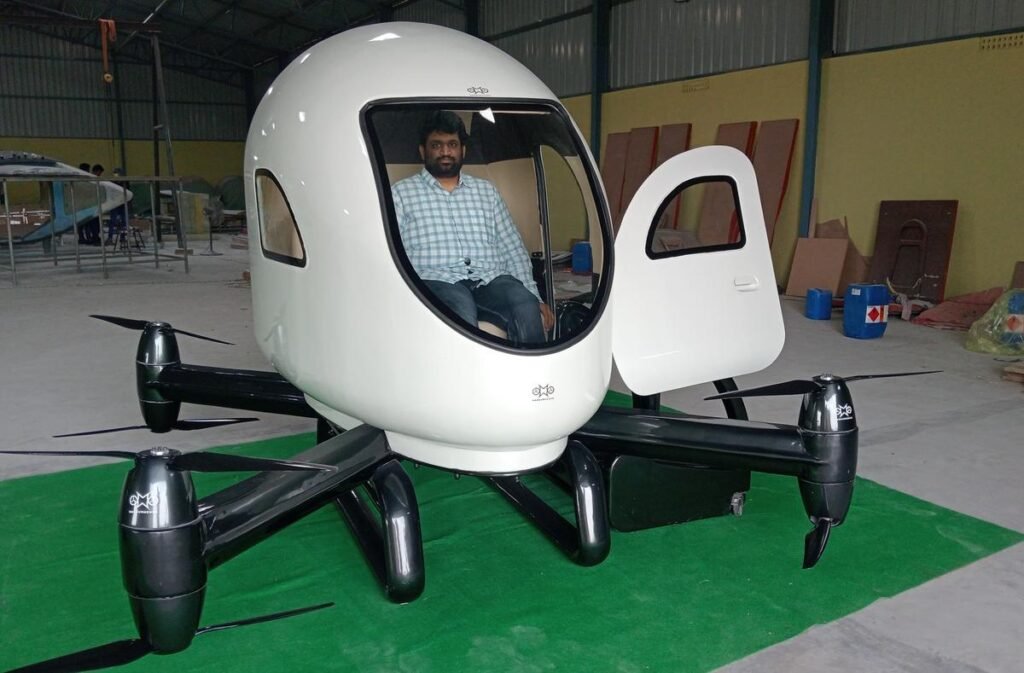
India’s push toward advanced air mobility reached a significant milestone as an air taxi designed and manufactured in Guntur successfully cleared a critical phase of structural frame testing. Developed by Magnumwings, the achievement represents a major step forward in the development of next-generation urban air transport solutions and underscores the growing capabilities of India’s private aerospace sector.
Structural frame testing is a crucial phase in aircraft development, validating the strength, durability, and safety of the airframe under various load conditions. Officials associated with the project said the successful completion of this stage confirms that the air taxi’s core structure meets stringent engineering and safety benchmarks required for further development.
A Key Step Toward Advanced Air Mobility
Advanced air mobility (AAM) is increasingly being viewed as a solution to urban congestion and last-mile connectivity challenges. Air taxis, particularly electric vertical take-off and landing (eVTOL) platforms, are expected to play a central role in future urban transport ecosystems.
The successful structural testing of the Guntur-built air taxi places India among a growing group of countries actively developing indigenous AAM platforms. Industry experts note that moving beyond design concepts into validated structural testing is a critical transition point, bringing such projects closer to real-world deployment.
Indigenous Engineering and Regional Manufacturing Strength
The project highlights the role of regional manufacturing hubs like Guntur in contributing to high-technology sectors traditionally dominated by global aerospace clusters. Engineers involved in the programme emphasized that the air taxi has been designed with a focus on local conditions, operational efficiency, and scalability.
The use of domestic design expertise and manufacturing infrastructure aligns with broader national objectives to strengthen self-reliance in strategic industries. Analysts say such projects demonstrate how India’s aerospace ecosystem is gradually expanding beyond conventional defence and commercial aviation into emerging mobility technologies.
Testing, Certification, and Next Development Phases
With structural frame testing completed, the air taxi programme is expected to move into subsequent phases, including systems integration, propulsion testing, and eventually flight trials. Each of these stages will require compliance with regulatory standards laid down by aviation authorities before any commercial deployment can be considered.
Officials indicated that parallel work is underway on avionics, power systems, and safety redundancies. The focus, they said, remains on ensuring that the platform meets international safety norms while remaining economically viable for urban operations.
Implications for India’s Urban Transport Future
The development comes at a time when Indian cities are exploring alternative mobility solutions to address congestion, pollution, and infrastructure constraints. Air taxis are being studied as potential complements—not replacements—to existing transport networks, particularly for time-sensitive travel and connectivity to airports or business districts.
Policy observers believe that successful indigenous platforms could reduce dependence on imported technologies and position India as a competitive player in the global AAM market. The Guntur air taxi project is therefore being closely watched as a test case for private-sector-led innovation in this space.
Conclusion
The successful completion of key structural tests by a Guntur-designed air taxi marks a notable achievement for India’s aerospace and mobility ambitions. As the project progresses toward advanced testing and certification stages, it reflects a broader shift toward innovation-driven manufacturing and the emergence of new technological capabilities beyond traditional industry centres.