


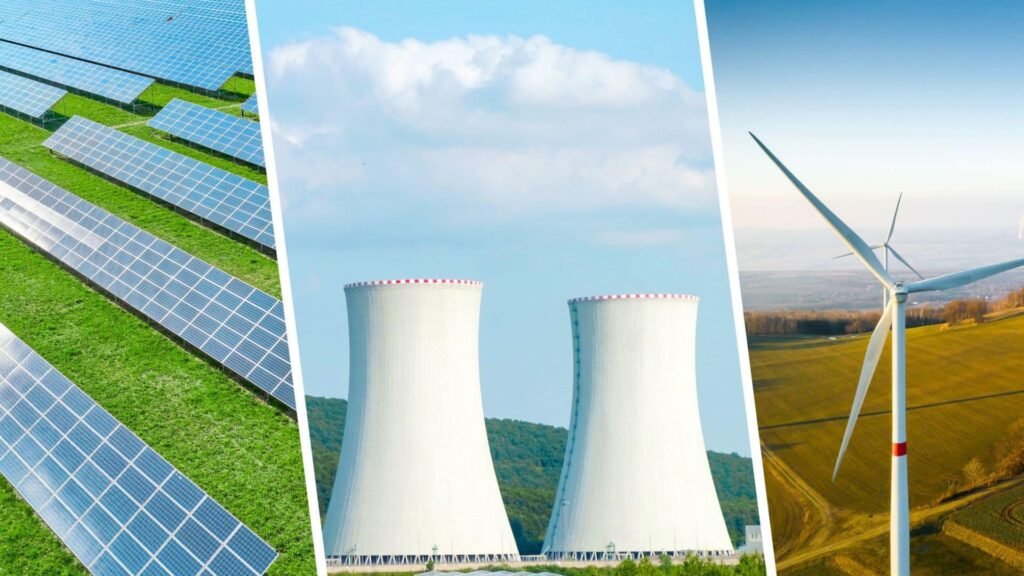
India’s renewable energy sector witnessed a significant policy and investment push as multiple states and central agencies announced fresh project approvals, regulatory updates, and large-scale solar tenders. The developments highlight the country’s continued focus on scaling clean energy capacity while strengthening regulatory oversight and grid stability.
These announcements come at a time when India is balancing rapid capacity expansion with the need for predictable tariffs, transparent market mechanisms, and robust infrastructure planning to support long-term energy security.
Major Investment Clearances Strengthen Renewable Capacity
At the state level, the Andhra Pradesh government cleared renewable energy projects worth ₹158 billion during the 14th State Investment Promotion Board meeting. These approvals formed a substantial part of the total ₹193.91 billion investment proposals cleared in the session, underlining the growing role of renewables in the state’s industrial and infrastructure strategy.
Among the key approvals was an investment proposal by Tata Power to establish a 10 GW ingot and wafer manufacturing facility in Nellore district, involving an outlay of ₹66.75 billion. The project is expected to strengthen domestic solar manufacturing capabilities, reduce import dependence, and support the broader renewable supply chain ecosystem.
Regulatory Reforms to Improve Grid Discipline
In parallel with capacity expansion, regulatory authorities are taking steps to strengthen power market discipline. The Bihar Electricity Regulatory Commission notified the Deviation Settlement Mechanism and Related Matters Regulations, 2025, following a suo motu proceeding. The move aims to align intra-state deviation settlement provisions with the National Electricity Policy, Tariff Policy, and the latest regulations issued by the Central Electricity Regulatory Commission.
The updated framework is expected to improve grid reliability, ensure accountability among power market participants, and reduce frequency-related risks arising from scheduling deviations.
Solar Tariff Rationalisation in Himachal Pradesh
Tariff policy also saw important developments, with the Himachal Pradesh Electricity Regulatory Commission notifying levelized tariffs for small and medium-scale solar projects. For solar projects with capacities above 3 MW and up to 5 MW in urban and industrial areas, the tariff has been set at ₹3.4 per kWh for the financial year 2027.
The commission also announced separate tariffs for projects in the 1 MW to 3 MW capacity range under the Renewable Energy Sources and Tariff Determination Regulations, 2017. Stakeholders have been invited to submit comments or objections by February 10, 2026, reflecting a consultative approach to tariff setting.
Large-Scale Solar Tenders Signal Continued Momentum
At the national level, the Solar Energy Corporation of India issued bids for the balance of system package for a 700 MW solar project at Raghanesda in Gujarat’s Banaskantha district. The tender covers comprehensive turnkey execution, including design, engineering, procurement, civil works, installation, testing, commissioning, and five years of operations and maintenance.
Bids are scheduled to be submitted and opened on January 29, 2026, underscoring the scale and pace at which utility-scale solar capacity is being pursued.
Urban and Municipal Solar Deployment Expands
Urban renewable adoption also received a boost as the Chandigarh Renewable Energy and Science and Technology Promotion Society invited bids to install 3 MW of grid-connected rooftop solar systems on municipal corporation buildings. The initiative aims to reduce electricity costs for public infrastructure while increasing the share of clean energy in urban consumption.
Bids for the project are due by January 29, 2026, with opening scheduled for January 30, reflecting growing interest in decentralised solar solutions.
A Coordinated Push Toward Clean Energy Transition
Taken together, these developments reflect a coordinated national and state-level effort to expand renewable capacity, improve regulatory clarity, rationalise tariffs, and encourage private sector participation. From manufacturing investments to grid reforms and municipal solar projects, the power sector is witnessing multi-layered progress.
As India advances toward its long-term clean energy targets, such measures are expected to play a critical role in ensuring sustainable growth, investor confidence, and reliable power supply across regions.