









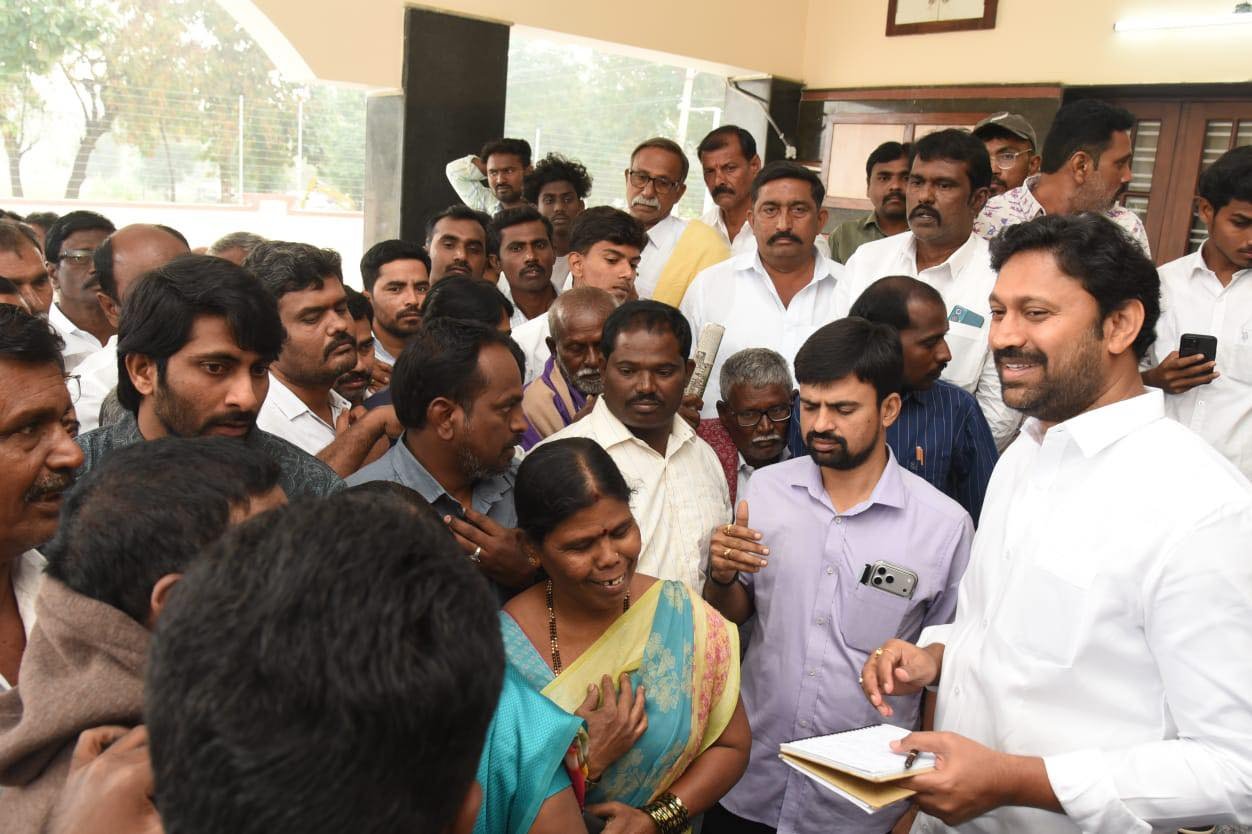
The District Review Committee (DRC) meeting held at the Kadapa Collectorate marked a significant moment in district-level governance, bringing together administrative officials and elected representatives to assess the progress of development works and welfare implementation. Parliament Member YS Avinash Reddy played an active role in the deliberations, underlining the need for transparent administration, time-bound execution of public schemes, and coordinated governance across departments. The review covered a wide spectrum of issues, including welfare delivery mechanisms, infrastructure projects, social sector performance, and responsiveness of district officials to public grievances.
The DRC meeting served not merely as a routine administrative exercise but as a platform to evaluate whether governance outcomes were aligning with public expectations. Avinash Reddy stressed that district reviews must go beyond paperwork and presentations and should reflect actual impact at the village and ward levels. He emphasized that data-driven reviews must be complemented by field-level verification to ensure that policies are translating into real benefits for citizens.
From Review Rooms to Public Spaces: Leadership Beyond Formal Meetings
Following the DRC meeting, YS Avinash Reddy participated in several public programmes across Kadapa, reinforcing his image as a leader who connects governance with people’s lived realities. Rather than confining his role to official proceedings, he chose to engage directly with citizens, party workers, and local representatives, listening to concerns and feedback from the ground.
These interactions reflected a leadership approach rooted in accessibility and dialogue. Residents raised issues related to agriculture support, irrigation challenges, education facilities, healthcare services, employment opportunities, and basic civic amenities. Avinash Reddy assured them that grievances raised during these interactions would be taken up with the concerned departments and monitored for follow-up action. His outreach highlighted the belief that governance is most effective when elected representatives remain accessible beyond formal platforms.
Welfare-Oriented Governance at the Core of Public Engagement
A recurring theme during Avinash Reddy’s post-DRC outreach was the centrality of welfare in governance. He reiterated that welfare schemes are not merely budgetary allocations but instruments of social justice meant to protect vulnerable sections of society. Emphasizing inclusivity, he noted that schemes related to agriculture, education, healthcare, women empowerment, and social security must reach every eligible beneficiary without administrative hurdles.

Avinash Reddy underlined that delays, leakages, or lapses in welfare delivery undermine public trust in institutions. He called upon officials and local representatives to treat welfare implementation as a responsibility rather than a formality. By linking administrative review outcomes with public feedback, he sought to ensure that welfare programmes remain responsive to evolving needs rather than static policy frameworks.
Coordinated Engagement With MLAs and Local Representatives
The public programmes saw the participation of MLAs and other local leaders, reflecting a coordinated leadership model aimed at collective problem-solving. Avinash Reddy emphasized that district development requires collaboration rather than isolated efforts. He highlighted the importance of alignment between Parliament members, MLAs, local bodies, and district administration to avoid duplication of work and ensure efficient use of public resources.
This coordinated approach was evident in discussions on infrastructure development, rural connectivity, and service delivery. By bringing multiple stakeholders onto a single platform, Avinash Reddy reinforced the idea that governance outcomes improve when accountability is shared and leadership functions as a team rather than as individual silos.
Strengthening Trust Through Accessibility and Continuous Engagement
Public response during the programmes indicated that Avinash Reddy’s consistent presence and approachability have contributed to building trust among constituents. Several residents noted that such engagements help bridge the gap between administration and the public, especially in regions like Rayalaseema where historical challenges have shaped public expectations of governance.
Avinash Reddy reiterated that his responsibility as a public representative extends beyond legislative duties to sustained engagement with constituents. He emphasized that listening to people’s concerns is essential for informed decision-making and policy advocacy. This approach, he stated, enables leaders to raise relevant issues effectively within institutional forums, backed by firsthand understanding of public needs.
Rayalaseema-Centric Perspective in Governance Discourse
Throughout his engagements, Avinash Reddy maintained a strong focus on Rayalaseema’s developmental priorities. He highlighted the need for equitable allocation of resources, attention to irrigation and agriculture, and targeted interventions to address regional disparities. By anchoring governance discussions in regional realities, he reinforced the importance of contextual policymaking rather than one-size-fits-all solutions.
The emphasis on Rayalaseema was not limited to infrastructure but extended to human development indicators such as education access, healthcare availability, and employment generation. Avinash Reddy stressed that sustainable development must balance physical infrastructure with social investment to ensure long-term progress.
Accountability as a Cornerstone of Effective Administration
A key takeaway from Avinash Reddy’s post-DRC outreach was his emphasis on accountability. He asserted that administrative reviews and public programmes must lead to measurable outcomes rather than symbolic gestures. Officials were urged to maintain transparency, adhere to timelines, and remain responsive to grievances raised during both formal reviews and public interactions.
He further noted that accountability is a two-way process, requiring both administrators and elected representatives to remain answerable to the public. By engaging openly with citizens after a major review meeting, Avinash Reddy sought to demonstrate that governance accountability does not end with reports but begins with public trust.
People-Centric Leadership in Action
The sequence of events following the DRC meeting in Kadapa offered a clear illustration of people-centric leadership in action. By integrating administrative oversight with public engagement, YS Avinash Reddy reinforced a governance model that values transparency, welfare orientation, and grassroots connection. His outreach underscored the belief that effective leadership is measured not only by policy formulation but by the ability to listen, respond, and act in the public interest.
As Kadapa continues to navigate development challenges and opportunities, such engagements are likely to play a critical role in shaping public confidence in governance institutions. Avinash Reddy’s post-DRC programmes reflected a commitment to sustained dialogue, inclusive development, and accountable leadership—key elements in strengthening democratic governance at the district level.