


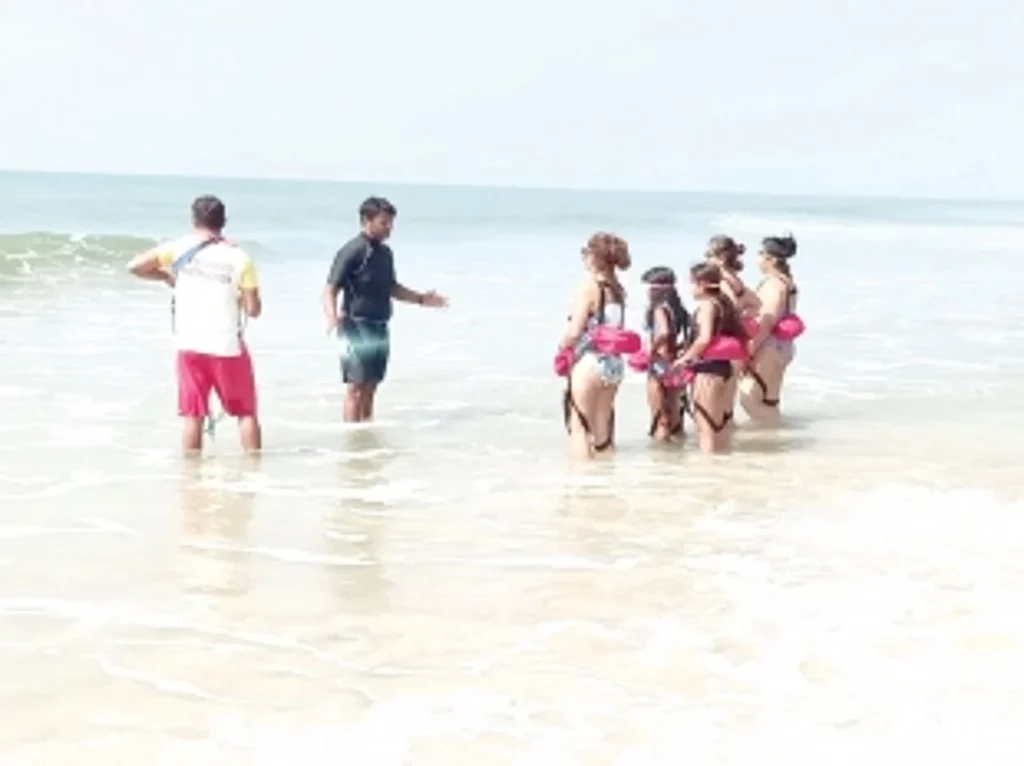
Goa’s beaches witnessed exceptionally high footfalls during New Year celebrations, as tourists from across India and abroad gathered to mark the year-end festivities. With crowds swelling across popular coastal stretches, public safety agencies faced the critical challenge of managing emergencies while ensuring uninterrupted access to medical and rescue services. The day’s events once again highlighted how essential trained lifesavers and structured response mechanisms are in preventing accidents from escalating into tragedies.
Beach-related incidents tend to rise during peak tourism periods due to overcrowding, unpredictable sea conditions, and lack of awareness among visitors. Against this backdrop, the effectiveness of Goa’s coastal safety framework became evident as multiple rescue operations were conducted across different beaches within a short span of time.
Timely Rescues Prevent Major Mishaps
On January 1, lifesavers stationed across Goa’s coastline responded to several emergency situations involving swimmers and tourists in distress. At Mobor beach, a foreign tourist sustained an injury after being stung by a stingray while swimming offshore. Lifeguards provided immediate first aid and coordinated with emergency medical services to ensure the individual received further treatment without delay.
At Arambol, a young visitor struggled while swimming in a sweet-water lake adjoining the beach and was promptly rescued. In another incident, two tourists were saved after being caught in rough sea conditions, while a separate rescue involved a visitor who was unable to swim back to shore. These interventions underscore the importance of constant surveillance, quick decision-making, and access to rescue equipment such as jet skis.
Medical Assistance and On-Ground Support
Beyond rescue operations, lifesavers also played a crucial role in providing first aid to injured beachgoers. At one location, a minor sustained a deep cut after stepping on broken glass while swimming. Immediate medical assistance at the lifesaver tower helped stabilise the situation before the child was reunited with family members.
Such incidents highlight the multi-dimensional role of beach safety personnel, who are required not only to perform water rescues but also to provide first-response medical care. Their presence significantly reduces response time, which is often the determining factor in preventing serious complications.
Importance of Trained Lifesavers and Infrastructure
The New Year incidents reaffirm the importance of deploying trained professionals across all major beaches, particularly during peak tourism seasons. Lifesavers undergo rigorous training in rescue techniques, first aid, and crowd management, enabling them to handle complex situations under pressure.
Equally important is the availability of supporting infrastructure, including observation towers, rescue equipment, communication systems, and coordination with ambulance services. Effective emergency response is rarely the result of individual effort alone; it depends on systems working in unison, supported by clear protocols and accountability.
Balancing Tourism Growth With Public Safety
Tourism continues to be a major economic driver for Goa, but it also brings heightened responsibility to ensure visitor safety. Incidents during festive periods serve as reminders that public safety planning must evolve alongside tourism growth. Crowd management, public awareness campaigns, and enforcement of safety advisories are essential to reduce risks.
Authorities have repeatedly emphasised that safety must not be compromised in the pursuit of tourism-driven activity. The New Year response demonstrates how proactive deployment and preparedness can mitigate risks even during high-pressure situations.
Need for Continuous Review and Improvement
While the prompt response on New Year’s Day prevented serious outcomes, continuous review of safety protocols remains necessary. Each rescue or injury provides insights into potential gaps, whether related to crowd behaviour, environmental hazards, or infrastructure needs.
Strengthening coordination between lifesavers, police, and medical services, along with public awareness initiatives, will be critical in further reducing incidents. Sustained focus on safety training and infrastructure investment will ensure that Goa’s beaches remain both vibrant and secure.
Conclusion: Preparedness as the Cornerstone of Public Safety
The New Year incidents along Goa’s coastline reinforce a key lesson: preparedness saves lives. Trained personnel, timely response, and effective coordination transformed potentially dangerous situations into controlled outcomes. As tourism continues to rebound and grow, maintaining high safety standards will remain essential to protecting both visitors and local communities.
Public safety, particularly in high-footfall destinations, must remain a non-negotiable priority, anchored in accountability, professionalism, and continuous improvement.