









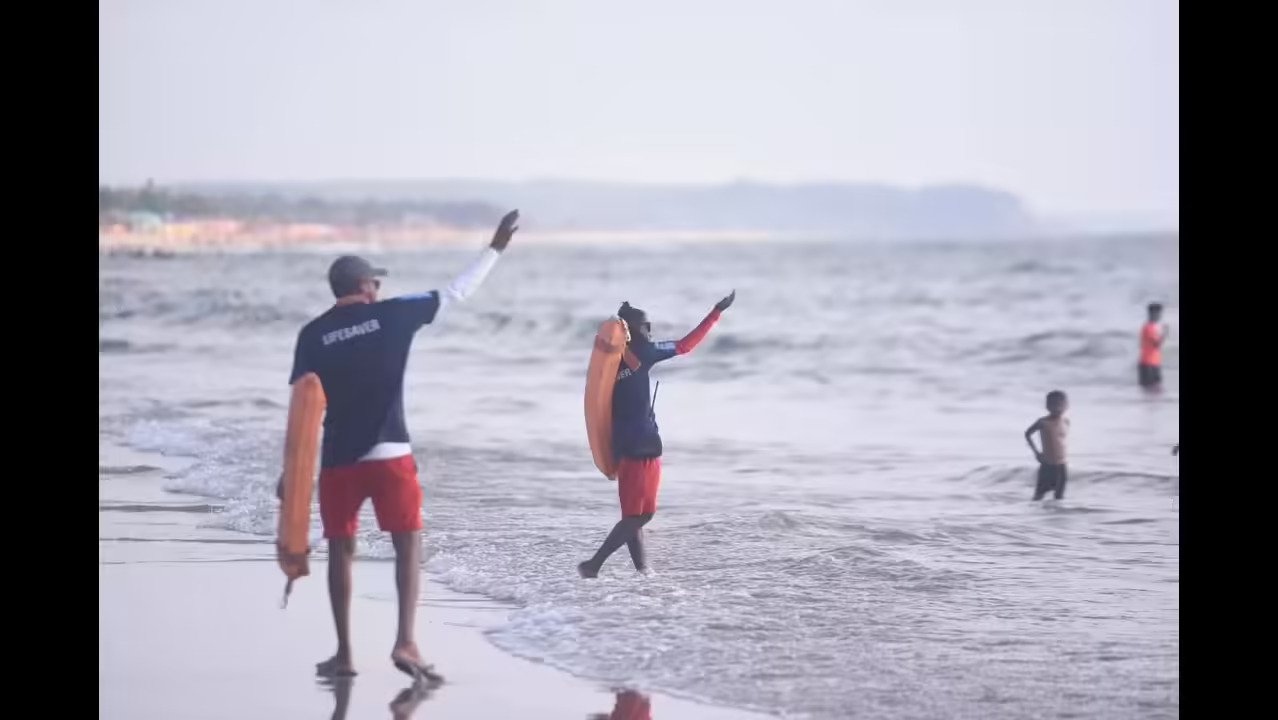
As Goa welcomed the New Year with large-scale celebrations and a surge in domestic and international tourists, public safety along the state’s extensive coastline emerged as a critical priority. Amid heavy footfall and crowded beaches, Drishti Marine lifesavers carried out multiple rescue, assistance, and emergency response operations across various locations on New Year’s Day, preventing potential tragedies and ensuring the safety of visitors and locals alike.
The coordinated efforts by Drishti Marine highlighted the importance of a trained, professional coastal safety system, especially during peak tourism periods when beaches witness heightened activity and increased risk factors.
Timely Drowning Rescues Across High-Footfall Beaches
On January 1, Drishti Marine lifesavers responded to multiple distress situations involving swimmers caught in difficulty due to strong currents, fatigue, and unfamiliarity with local water conditions.
At Arambol beach, a 19-year-old woman from Maharashtra encountered difficulty while swimming in the freshwater lake adjoining the beach. Lifesavers on duty identified the distress promptly and executed a swift rescue, bringing the individual to safety before the situation escalated.
At Baga beach, one of Goa’s busiest tourist destinations, two male tourists in their early-to-mid 20s from Karnataka were rescued after struggling against sea currents. In a separate incident at the same beach, a 20-year-old tourist from Bihar was saved after being unable to swim back to shore. The lifesavers’ quick assessment of conditions and immediate intervention prevented the incidents from turning fatal.

These rescues underscore the heightened risks during festive seasons when beaches remain crowded well into the evening, often with visitors unaware of local sea conditions.
Successful Tracing and Reuniting of Missing Children
Beyond water rescues, Drishti Marine lifesavers played a vital role in tracing missing children, a recurring challenge during large gatherings and peak tourism days.
At Baga beach, an eight-year-old girl from Lucknow was reported missing after getting separated from her guardians amid the crowds. Following a coordinated search along different stretches of the beach, lifesavers located the child and reunited her with her family after proper verification.
At Betalbatim, a four-year-old child was traced within approximately 30 minutes of being reported missing. Lifesavers coordinated with local authorities and conducted a systematic search, ensuring the child was safely handed over to her parents.
Similar interventions were reported at Colva, where a four-year-old boy from Margao was found wandering alone during routine patrolling. Lifesavers traced his parents and ensured a safe reunion. At Varca beach, a seven-year-old girl from Karnataka who was found crying alone was later handed over to a relative after police verification.
These incidents highlight the broader responsibilities shouldered by lifesavers beyond water safety, particularly in managing crowd-related emergencies.
Emergency Medical Assistance Provided to Injured Tourists
Drishti Marine lifesavers also extended medical assistance to beachgoers who sustained injuries during recreational activities.
At Mobor beach, a 53-year-old British tourist suffered a stingray sting while swimming. Lifesavers administered immediate first aid and coordinated with 108 emergency services to shift the tourist for further medical treatment.
At Palolem beach, a 10-year-old boy from Pune sustained a deep cut on his leg after stepping on broken glass while swimming. Lifesavers stabilised the injury using first-aid protocols and safely handed the child over to his father.
These interventions reflect the preparedness of lifesaving teams to address a range of emergencies, from marine injuries to accidental wounds.
Managing Public Safety Amid Peak Tourist Influx
The New Year period is traditionally one of the busiest times for Goa’s tourism sector, with beaches experiencing heavy footfall throughout the day and night. The combination of large crowds, alcohol consumption, unfamiliar sea conditions, and prolonged beach activity significantly increases safety risks.
Drishti Marine’s presence across multiple beaches ensured continuous surveillance, rapid response, and effective coordination with local authorities and emergency services. Lifesavers remained vigilant, enforcing safety protocols and responding to incidents with professionalism and efficiency.
The Importance of Professional Lifesaving Infrastructure
The events of New Year’s Day underline the critical role of institutionalised lifesaving services in coastal states like Goa. Professional training, clear standard operating procedures, and seamless coordination with emergency services are essential components of an effective beach safety framework.
Drishti Marine’s operations demonstrate how proactive safety management can prevent loss of life, reduce panic during emergencies, and enhance public confidence in tourism infrastructure.
Strengthening Goa’s Reputation as a Safe Tourism Destination
Ensuring visitor safety is central to sustaining Goa’s image as a responsible and globally competitive tourism destination. The timely interventions by Drishti Marine lifesavers not only safeguarded lives but also reinforced the importance of compliance with safety advisories and respect for local conditions.
Authorities continue to emphasise the need for tourists to follow safety guidelines, remain within designated swimming zones, and heed warnings issued by lifesavers on duty.
A Commitment to Public Safety and Preparedness
As Goa continues to attract large crowds during festivals and peak seasons, the role of lifesaving services will remain indispensable. Drishti Marine’s New Year operations stand as a reminder that behind every celebration lies a dedicated team ensuring safety, preparedness, and rapid response.
Sustained investment in coastal safety infrastructure, regular training, and public awareness will be key to strengthening Goa’s emergency response ecosystem and protecting both residents and visitors in the years ahead.