


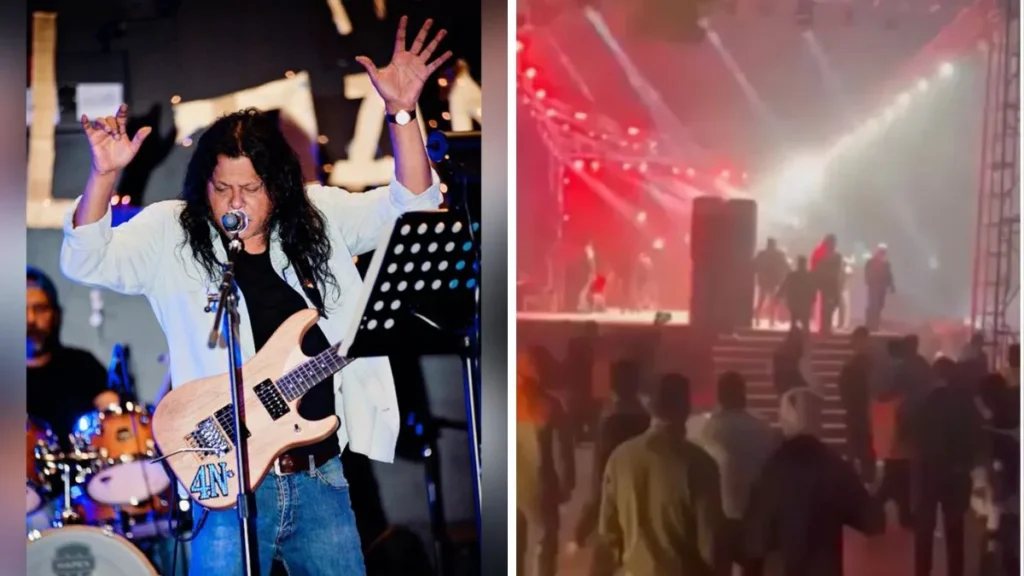
The cancellation of a concert by renowned Bangladeshi singer James in Faridpur has brought renewed attention to the deteriorating safety environment for artists and cultural events in Bangladesh. The programme, scheduled for December 26 to mark a local school’s anniversary, was called off after a violent group attempted to disrupt the gathering by force.
The incident occurred nearly 120 kilometres from Dhaka and resulted in injuries to more than 25 people, according to local reports. The disruption has raised serious concerns about law enforcement preparedness and the broader climate surrounding cultural expression in the country.
Mob Violence Forces Authorities to Intervene
Eyewitnesses stated that a group of attackers attempted to force entry into the venue, hurling bricks and stones at attendees. Students and organisers initially resisted the intrusion, but escalating violence prompted local authorities to instruct organisers to cancel the concert in the interest of public safety.
James reportedly managed to leave the venue safely amid the chaos. The sudden cancellation marked another instance where cultural events have been disrupted by organised groups opposed to music and public performances.
Artists and Cultural Institutions Under Increasing Threat
The incident is part of a broader pattern of attacks on artists, performers, and cultural institutions across Bangladesh. Prominent cultural centres such as Chhayanaut and Udichi have reportedly been vandalised or destroyed in recent months, sparking alarm among intellectuals, artists, and civil society groups.
Critics argue that the repeated targeting of cultural platforms signals an attempt to suppress artistic expression and secular traditions that have long been part of Bangladesh’s social fabric.
Taslima Nasreen Flags Alarming Trend
Author Taslima Nasreen, currently living in exile, highlighted the Faridpur incident on social media, describing it as part of a disturbing and escalating trend. She cited multiple instances where artists either faced threats or declined to perform in Bangladesh due to safety concerns.
Nasreen pointed out that internationally recognised musicians, including descendants of legendary maestros, have refused invitations to perform, citing fear and lack of protection for artists and cultural institutions.
Questions Over Governance and Law Enforcement
Observers and opposition voices have questioned the ability of the interim administration to maintain law and order amid rising street-level radicalisation. Critics allege that inaction against violent mobs has emboldened extremist elements, creating an atmosphere of fear that directly impacts cultural life.
Some analysts warn that continued instability could have broader implications, including international reputational damage and erosion of democratic freedoms.
Cultural Freedom at a Crossroads
James, a widely respected figure in Bangladeshi and Indian music, has long been seen as a symbol of cultural unity and artistic freedom. The attack on his concert is being viewed as a turning point that underscores the vulnerability of artists in the current climate.
As Bangladesh approaches a sensitive political period, civil society groups have called for decisive action to safeguard cultural spaces, ensure accountability, and restore confidence in public safety mechanisms.