


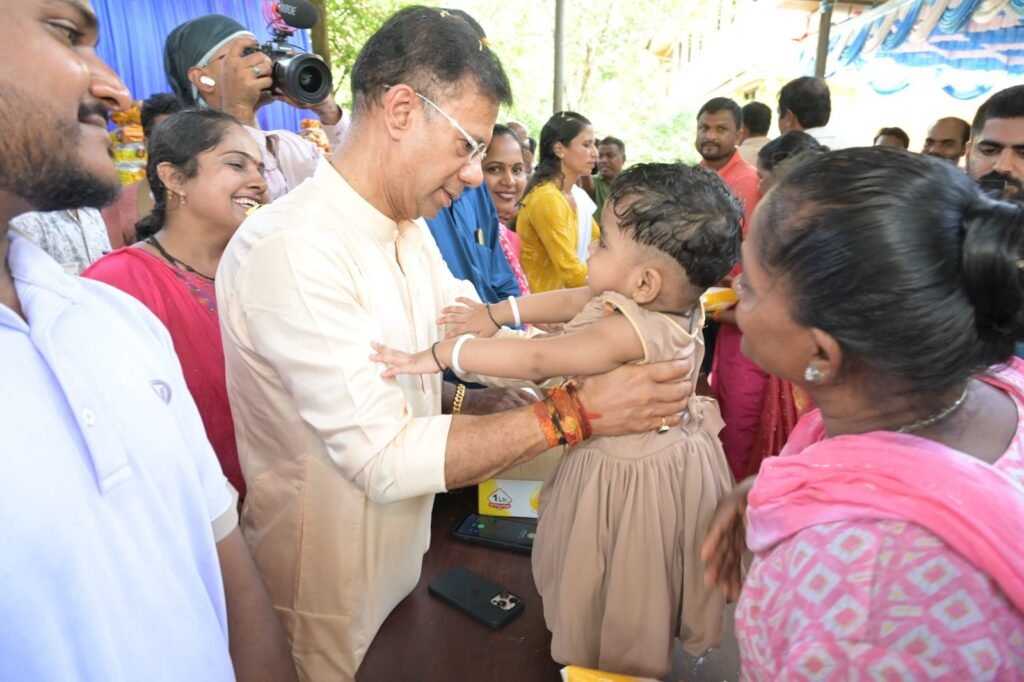
Early childhood education in Goa is undergoing a significant transition, with a renewed emphasis on play-based learning under the leadership of Vishwajit Rane. Recognising that young children learn most effectively through exploration, interaction, and engagement, the approach marks a deliberate shift away from rigid, rote-driven teaching methods towards developmentally appropriate learning practices.
The focus is on creating child-friendly Anganwadi environments where learning is experiential rather than instructional. By encouraging activity-oriented practices, children are able to grasp foundational concepts through hands-on experiences that support natural curiosity, attention development, and early problem-solving abilities.
Shift From Rote Learning to Experiential Education
Traditional early education models often relied heavily on memorisation, offering limited scope for creativity and interaction. The current approach promoted under Vishwajit Rane’s leadership places emphasis on learning through play, which experts identify as critical during the formative years.
Anganwadi centres are being guided to incorporate structured play and interactive sessions that allow children to actively participate in the learning process. This shift aims to ensure that children are not passive recipients of information but active learners developing essential cognitive and behavioural skills.
Storytelling, Music and Art as Core Learning Tools
A defining feature of the initiative is the integration of storytelling, music, art, and group activities into everyday learning. Storytelling and rhymes help strengthen language skills and imagination, while music and movement encourage emotional expression, coordination, and rhythm.
Art-based activities promote creativity and fine motor development, and group play nurtures cooperation, empathy, and social bonding. Together, these methods create a balanced learning environment that addresses multiple aspects of child development.
Focus on Holistic Child Development
The emphasis on play-based learning reflects a broader vision of holistic development, where academic readiness is complemented by emotional and social growth. Early exposure to collaborative and creative activities helps children build confidence, communication skills, and adaptability.
By embedding these practices within Anganwadi centres, the initiative aims to lay a strong foundation for lifelong learning, ensuring children are better prepared for formal schooling and future educational challenges.
Strengthening the Anganwadi Ecosystem
The reforms also underline the importance of strengthening Anganwadi centres as key institutions for early childhood development. Improved learning practices, coupled with supportive environments, enhance the overall quality of early education delivery.
Officials note that such initiatives contribute not only to improved educational outcomes but also to greater community trust in public early childhood education systems.
Long-Term Impact on Education Outcomes
Education experts highlight that investments in early childhood education yield long-term social and economic benefits. By prioritising play-based learning, Goa is aligning its Anganwadi system with globally recognised best practices in early education.
Under Vishwajit Rane’s leadership, the focus on joyful, interactive, and inclusive learning is expected to strengthen foundational learning outcomes and contribute to improved educational trajectories for children across the state.