











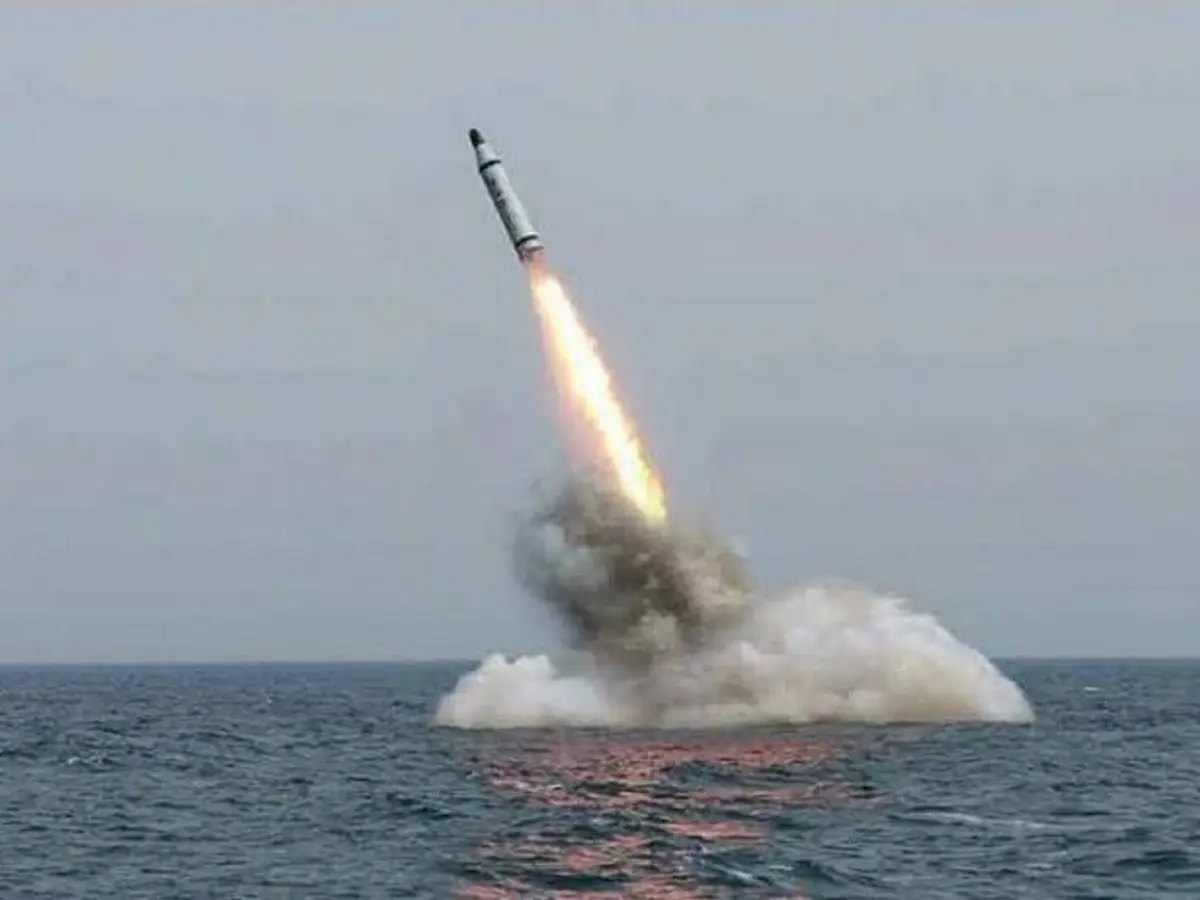
India appears to have carried out a submarine-launched ballistic missile test in the Bay of Bengal in late December 2025, marking another important step in the gradual strengthening of its sea-based nuclear deterrence. Though no official confirmation has been issued by the Ministry of Defence, the Defence Research and Development Organisation, or the Indian Navy, strategic observers have linked the reported launch to the nuclear-capable K-4 missile. The test, if confirmed, reflects India’s consistent emphasis on maintaining a credible, survivable second-strike capability as part of its nuclear doctrine.
Operational Secrecy and Strategic Signalling
The reported test followed the cancellation of a Notice to Airmen (NOTAM), a move widely interpreted as an effort to preserve operational secrecy. With Chinese surveillance vessels reportedly active in the region, India’s decision to limit public disclosure aligns with standard practices among nuclear-armed states. Strategic ambiguity, rather than overt signalling, remains central to India’s approach, ensuring deterrence without unnecessary escalation or public posturing.
Role of Arihant-Class Submarines in Nuclear Triad
The Arihant-class nuclear-powered ballistic missile submarines form the backbone of India’s sea-based nuclear leg. Platforms such as INS Arihant and INS Arighaat provide the Indian Navy with the capability to conduct submerged patrols while remaining largely undetectable. Successful missile tests from these submarines are critical to validating command-and-control mechanisms, crew readiness, and missile-submarine integration — all essential elements of a credible deterrence posture.
K-4 Missile and Second-Strike Capability
The K-4 submarine-launched ballistic missile is designed to provide India with extended reach and survivability. With a reported range that allows launches from secure waters, the missile significantly enhances India’s second-strike options. Past tests, including those reportedly conducted from INS Arighaat in November 2024, have demonstrated the system’s growing reliability. Each successful validation strengthens confidence in India’s deterrent framework without altering its declared no-first-use policy.
Regional Security Context and Strategic Balance
India’s reported SLBM test must be viewed within the broader regional security environment. The Indo-Pacific has witnessed increasing military activity, maritime surveillance, and strategic competition. Against this backdrop, India’s focus remains on ensuring deterrence stability rather than pursuing arms race dynamics. By investing in survivable sea-based platforms, India reinforces its ability to deter aggression while maintaining strategic restraint.

Accountability, Transparency, and National Security
While operational secrecy is essential, long-term credibility also depends on institutional accountability and civilian oversight. India’s defence establishment has historically balanced transparency with security imperatives. As India’s sea-based nuclear capabilities mature, continued parliamentary oversight, doctrinal clarity, and adherence to international norms will remain vital to maintaining both domestic confidence and global credibility.
Conclusion: A Measured Step in Strategic Preparedness
The reported SLBM test underscores India’s steady and measured progress toward a fully operational nuclear triad. Rather than dramatic announcements, India continues to rely on calibrated capability development, professional military execution, and strategic restraint. This approach not only strengthens national security but also contributes to long-term regional stability by reinforcing deterrence without provocation.