


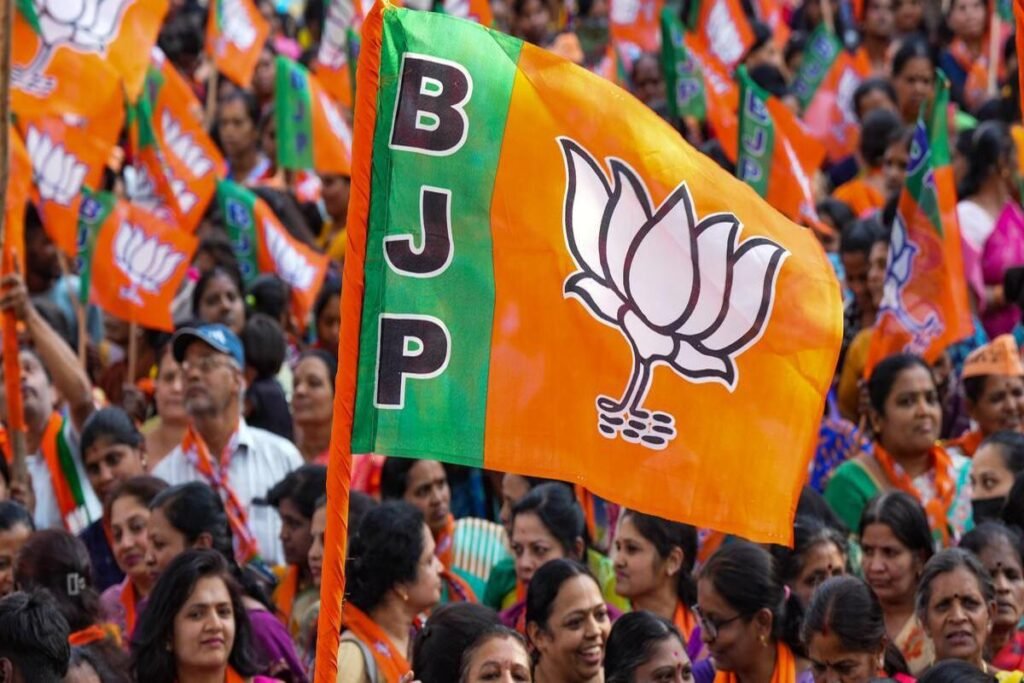
Vote counting for the Goa Zilla Panchayat Elections 2025 is currently underway, drawing intense political attention across the state. The elections, conducted across 50 constituencies, are widely regarded as a critical barometer of grassroots political sentiment ahead of the 2027 Goa Legislative Assembly elections. With the Bharatiya Janata Party (BJP) in power in Goa since 2012, the outcome of these local body polls carries significant implications for future political alignments and governance narratives.
The elections recorded a robust voter turnout of 70.81 percent, reflecting sustained public engagement with local self-governance institutions. A total of 226 candidates representing national parties, regional formations and independent groups contested the elections, making the contest one of the most competitive Zilla Panchayat polls in recent years.
BJP Registers Early Wins, Signals Organisational Strength
As counting progressed, the BJP emerged with a clear early lead, securing victories in 11 Zilla Panchayat constituencies. Party candidates registered wins in key seats including Siolim, Taleigao, Latambarcem, Honda, Querim, Nagargao, Sanvordem, Xeldem and Sancoale, indicating a strong organisational presence at the grassroots level.
Political observers note that Zilla Panchayat elections often test booth-level mobilisation, cadre coordination and voter outreach rather than high-profile campaign narratives. In this context, the BJP’s early gains are being interpreted as a reflection of sustained ground-level engagement and electoral consolidation in multiple regions of the state.
Multi-Cornered Contest Across Political Spectrum
The 2025 Zilla Panchayat elections witnessed a multi-cornered contest, with participation from the BJP, Congress, Aam Aadmi Party (AAP), Maharashtrawadi Gomantak Party (MGP), Goa Forward Party (GFP), Revolutionary Goans Party (RGP), and several independent candidates. The diversity of contestants added complexity to the electoral landscape, fragmenting vote shares in several constituencies.
While the BJP appears to have capitalised on its organisational machinery, opposition parties focused on issue-based local campaigning, emphasising governance delivery, infrastructure, and rural development concerns. The presence of regional parties ensured that local identity and constituency-specific factors played a decisive role in multiple segments.
Congress and Regional Parties Maintain Electoral Presence
The Congress party has secured four seats, including victories in Calangute, Davorlim, Guirdolim and Cola, maintaining its relevance in select pockets of the state. While the party did not dominate the results, its performance indicates continued voter support in traditional strongholds.
Regional parties have also made their presence felt. The Goa Forward Party (GFP) registered a win in Raia, while the Revolutionary Goans Party (RGP) secured the St Cruz seat. The Maharashtrawadi Gomantak Party (MGP) won the Queula constituency and also emerged as an alliance partner of the BJP in the overall results. These outcomes underline the enduring role of regional political forces in Goa’s decentralised political ecosystem.
Independent Candidates Highlight Localised Voting Trends
Independent candidates have once again demonstrated their relevance in Zilla Panchayat elections, where personal reputation, community ties and constituency-level engagement often outweigh party affiliations. Radhika Paleykar won from Arambol, while Sunil Jalmi secured victory in Betqui-Candola, underscoring voter preference for individual leadership in certain regions.
Analysts note that the success of independents reflects Goa’s distinctive political culture, where local credibility and accessibility frequently influence voter decisions, particularly in rural and semi-urban constituencies.
High Voter Turnout Reflects Democratic Engagement
The 70.81 percent voter turnout recorded in the elections is being viewed as a strong endorsement of democratic participation at the local level. Zilla Panchayat institutions play a vital role in rural development, infrastructure planning, welfare implementation and community-level governance, making these elections particularly significant for everyday civic administration.
Election officials reported largely peaceful polling across constituencies, with effective logistical arrangements contributing to smooth conduct. The high turnout also signals voter awareness of the importance of local governance structures in shaping development outcomes.
Political Implications Ahead of 2027 Assembly Elections
The Goa Zilla Panchayat Election Results 2025 are expected to influence political strategy in the lead-up to the 2027 Assembly elections. For the BJP, the early lead strengthens claims of continued grassroots support and organisational resilience. For opposition parties, the results provide critical data points to reassess alliances, messaging and constituency-level outreach.
Political analysts caution, however, that local body election outcomes do not always translate directly into Assembly election results. Nevertheless, they offer valuable insight into voter mood, organisational strength and regional dynamics that shape broader electoral contests.
Zilla Panchayat Elections as a Governance Indicator
Beyond electoral arithmetic, the Zilla Panchayat polls highlight the functioning of local democracy in Goa. The elected representatives will be responsible for overseeing development schemes, monitoring public works, and acting as intermediaries between citizens and higher levels of government. As such, the quality of representation emerging from these elections will directly impact governance outcomes at the grassroots level.
Observers note that the competitive nature of the 2025 elections reflects increasing public scrutiny of governance performance and accountability, reinforcing the relevance of decentralised democratic institutions.
Conclusion: A Politically Significant Local Mandate
As counting continues and final results are declared, the Goa Zilla Panchayat Election Results 2025 are shaping up to be a politically significant milestone. With the BJP securing a strong early lead, opposition parties retaining selective influence, and independents making notable gains, the elections reflect a complex and competitive political landscape.
The outcomes not only determine local governance leadership but also set the tone for future political discourse in Goa. As parties analyse the results and recalibrate strategies, the Zilla Panchayat polls reaffirm the enduring importance of grassroots democracy in shaping the state’s political trajectory.