


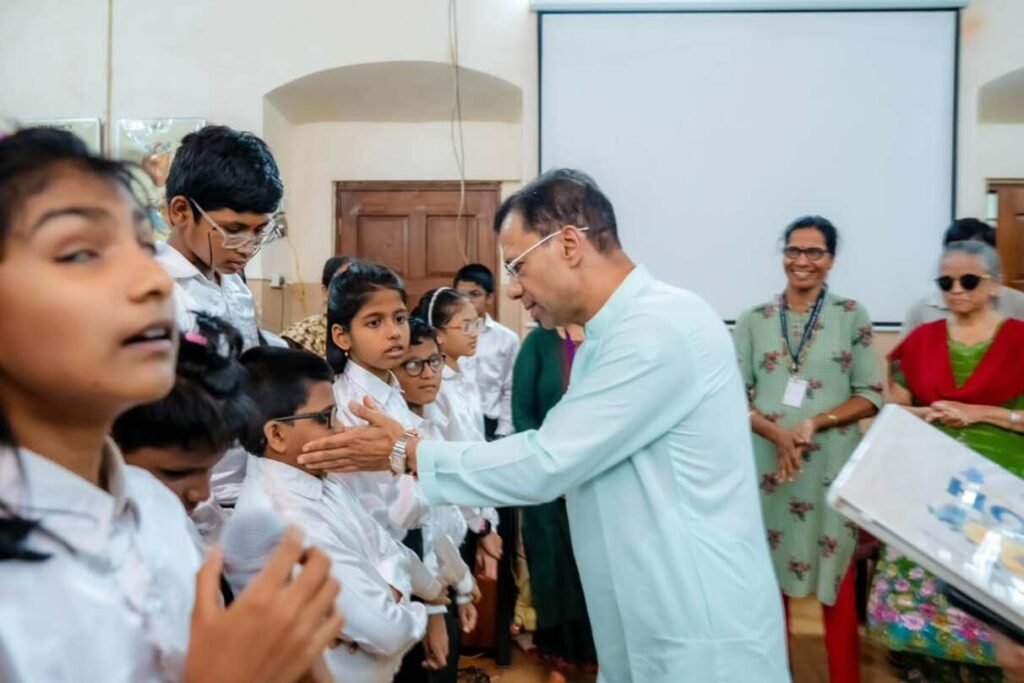
Children from the Anganwadi Centre under the Women and Child Development (WCD) Block, Dharbandora, recently went on an educational field trip to the 77-foot-tall bronze statue of Lord Ram at Shree Samsthan Gokarn Jeevottam Mutt in South Goa. The initiative was aimed at providing young learners with exposure to real-world experiences beyond the traditional classroom. Highlighting the importance of such initiatives, Health Minister Vishwajit Rane stressed that early childhood education must go beyond textbooks, allowing children to observe, explore, and learn through practical experiences. By visiting a culturally and spiritually significant site, children not only enhanced their learning but also created lasting memories that positively influence their cognitive and emotional development.
Encouraging Curiosity and Social Interaction
The field trip also fostered social interaction among children, giving them opportunities to bond with peers, develop communication skills, and build confidence in a relaxed and joyful setting. Vishwajit Rane underlined that social experiences during early childhood are crucial in shaping emotional intelligence and interpersonal skills. Group activities, discussions, and shared exploration during outings like this help children develop teamwork, problem-solving abilities, and a sense of community, all of which are vital for holistic growth.
Exposure to Cultural and Spiritual Values
In addition to educational and social benefits, the visit introduced children to cultural and spiritual values in an age-appropriate manner. Children learned about heritage, traditions, and the symbolic significance of Lord Ram, promoting moral development and ethical awareness from a young age. Minister Vishwajit Rane highlighted that early exposure to cultural landmarks fosters respect for traditions and contributes to the overall emotional and social development of children, complementing their formal education.
Importance of Experiential Learning in Early Education
Health Minister Vishwajit Rane reiterated that experiential learning is a cornerstone of early childhood education. He explained that field trips and practical activities help children understand their environment better, develop cognitive skills, and cultivate curiosity, while also creating positive and lasting impressions. According to the minister, these initiatives ensure that children grow not just academically but also emotionally, socially, and morally, laying the foundation for lifelong learning and well-rounded development.
Role of Anganwadi Centres in Child Development
Anganwadi centres continue to play a critical role in providing early education, nutrition, and overall well-being. By incorporating experiential learning activities like field trips, these centres strengthen classroom teachings and provide children with meaningful, safe exposure to the real world. Vishwajit Rane emphasised that such structured learning opportunities are essential for developing confidence, curiosity, and social skills among young learners.
Government’s Commitment to Holistic Child Welfare
The field trip reflects the Goa government’s commitment, championed by Health Minister Vishwajit Rane, to promoting holistic child development. By prioritising joyful, experiential, and culturally enriching learning experiences, the government aims to ensure balanced growth for children during their formative years. Initiatives like these demonstrate a strong focus on combining education, culture, social interaction, and moral learning to create a nurturing environment that prepares children for a bright future.