


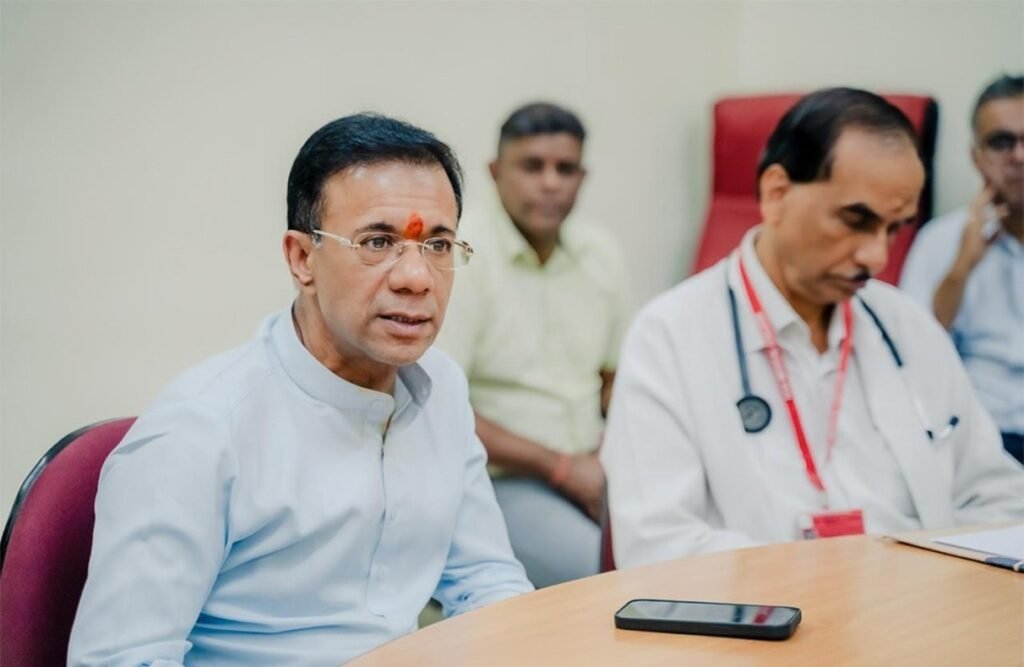
Goa has emerged as one of the leading states in India in the implementation of the Ayushman Bharat Digital Mission (ABDM), following sustained efforts under the leadership of Health Minister Vishwajit Rane. The state has created over 8–9 lakh ABHA (Ayushman Bharat Health Account) digital health IDs, covering a substantial portion of its population and strengthening the foundation of digital healthcare delivery.
The ABHA ID functions as a unique digital health identity, enabling citizens to securely store and access their medical history, including OPD visits, prescriptions, laboratory reports, and diagnoses. This allows patients to carry their health records seamlessly across government healthcare facilities, reducing dependence on physical files and manual documentation.
Goa Among Top States in Per-Capita ABHA Adoption
With the large-scale rollout of ABHA IDs, Goa has positioned itself among the leading states in per-capita adoption of digital health identities. The initiative reflects a strong policy focus on patient-centric and paperless healthcare systems, aligned with the broader objectives of Digital India and healthcare transparency.
Officials note that the digital ecosystem has helped streamline hospital workflows while empowering patients with greater control over their personal health data through consent-based access.
Digitisation of Hospitals and Primary Health Centres
Alongside ABHA creation, the Goa health department undertook comprehensive digitisation of government hospitals and Primary Health Centres (PHCs). A major milestone in this effort was PHC Corlim becoming one of the first fully digitised PHCs in the country, where patient registration, consultations, and medical records are integrated through ABHA IDs.
This integration has enabled doctors to access patient history instantly, subject to consent, ensuring better-informed clinical decisions and continuity of care.
Integration of Digital Health Records
More than 4 lakh digital health records have already been integrated into the ABDM ecosystem in Goa. This has significantly reduced duplication of diagnostic tests, improved diagnostic accuracy, and lowered patient waiting times in public hospitals.
Healthcare professionals have highlighted that access to historical medical data has improved treatment outcomes, particularly for patients with chronic illnesses who require regular follow-ups across facilities.
Impact on Public Healthcare Efficiency
The digital transformation has resulted in measurable improvements in hospital efficiency, data-driven planning, and service delivery. It has also strengthened health data analytics for policymakers, enabling better allocation of resources and targeted interventions.
By reducing paperwork and manual processes, the initiative has enhanced transparency and accountability within the public healthcare system.
Towards a Future-Ready Healthcare System
Under Vishwajit Rane’s leadership, the ABDM rollout has laid the groundwork for an integrated and future-ready healthcare system in Goa. The focus on technology-driven reforms underscores the state’s commitment to accessible, efficient, and patient-focused public health services.
As Goa continues to expand its digital health infrastructure, the ABDM implementation stands as a key example of how governance, technology, and public welfare can converge to strengthen healthcare delivery.987