








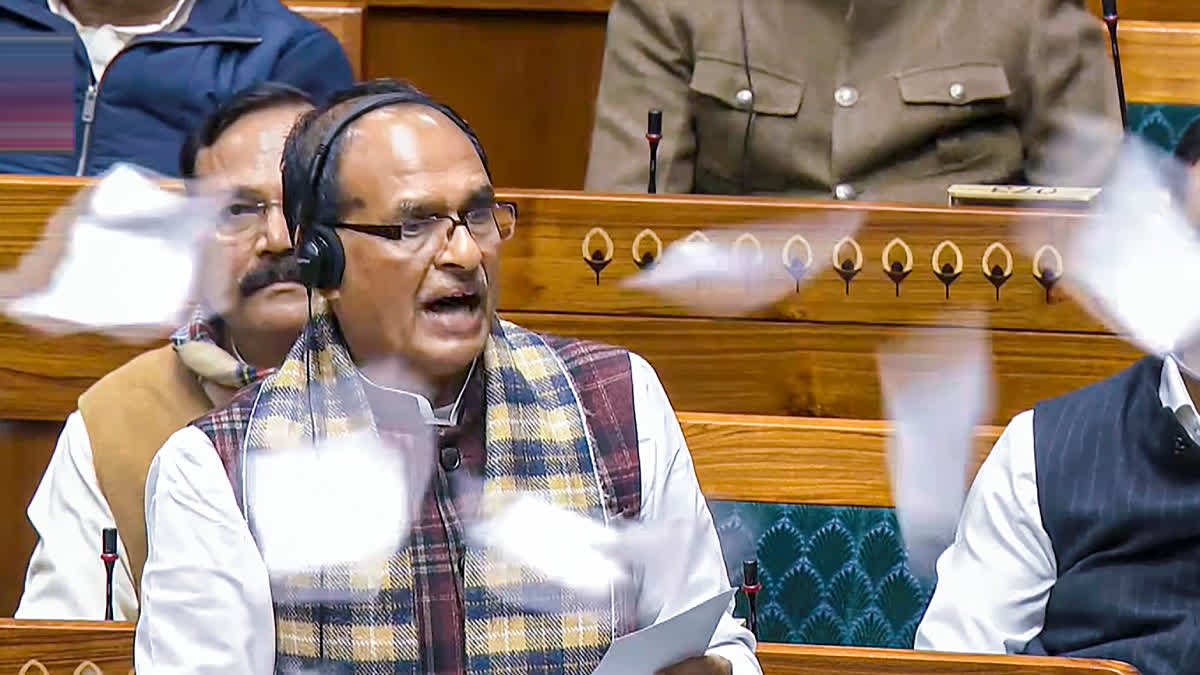
The Lok Sabha on Wednesday passed the Viksit Bharat Guarantee for Rozgar and Ajeevika Mission (Gramin) Bill amid repeated disruptions and vocal protests by opposition members, leading to multiple adjournments of the House. The Bill replaces the nearly 20-year-old Mahatma Gandhi National Rural Employment Guarantee Act (MGNREGA) and introduces a revised statutory framework for rural employment.
Despite the disorder in the House, the government asserted that the new legislation is designed to modernise rural employment guarantees and accelerate village-level development across the country.
Key Provisions: 125 Days of Statutory Rural Employment
Under the new law, every rural household whose adult members volunteer to undertake unskilled manual work will be entitled to 125 days of wage employment in a financial year, an increase from the existing provision under MGNREGA. The government has positioned the Bill as a step toward strengthening livelihood security while aligning employment schemes with broader development goals.
The legislation mandates that state governments frame compatible schemes within six months of the Act coming into force, ensuring implementation at the grassroots level.
Government’s Rationale: Self-Reliant Villages and Poverty Reduction
Moving the Bill, Union Rural Development Minister Shivraj Singh Chouhan said the legislation would promote all-round development of villages and contribute to making rural India poverty-free. He said the new framework reflects the government’s vision of self-reliant villages, stressing that employment generation must go beyond temporary work and contribute to sustainable growth.

The minister maintained that the revised structure would improve transparency, efficiency, and accountability in rural employment programmes.
Opposition Criticism Over Repeal and Renaming of MGNREGA
Opposition parties mounted a sharp attack on the government over the repeal and renaming of MGNREGA. Trinamool Congress MP Mahua Moitra accused the government of undermining Mahatma Gandhi’s legacy, arguing that removing his name from the legislation was both symbolic and ideological.
She alleged that the move diluted the original spirit of rural employment guarantees and claimed the Bill contradicted the principles of inclusive development and “Ram Rajya” that the ruling dispensation often invokes.
Congress Flags Concerns Over Federal and Social Impact
Congress MP Jai Prakash described the removal of Mahatma Gandhi’s name as “deeply troubling” and alleged that the proposed law could create additional financial burdens for states. He also warned that the Bill might weaken the role of gram sabhas in deciding the nature of works under the scheme.
The Congress leader termed the legislation “anti-poor” and “anti-Dalit,” claiming it reflected a shift away from grassroots empowerment toward centralised decision-making.
BJP Counters Allegations, Defends Structural Reform
Responding to the criticism, BJP MP Brijmohan Agarwal defended the legislation, stating that the earlier MGNREGA framework had failed to deliver sustainable economic outcomes. He alleged that the scheme had been reduced to unproductive work cycles and was marred by corruption.
Agarwal argued that the new law, with its revised structure and emphasis on accountability, would deter misuse of funds and strengthen the rural economy.
Political Implications and the Road Ahead
The passage of the Bill highlights deep political divisions over rural welfare policy and the legacy of landmark social legislations. While the government views the law as a reform-oriented step aligned with its broader development agenda, the opposition continues to frame it as an erosion of established social security mechanisms.
As states prepare to align their schemes with the new law, its real impact will depend on effective implementation, funding commitments, and the extent to which it addresses rural employment challenges on the ground.