










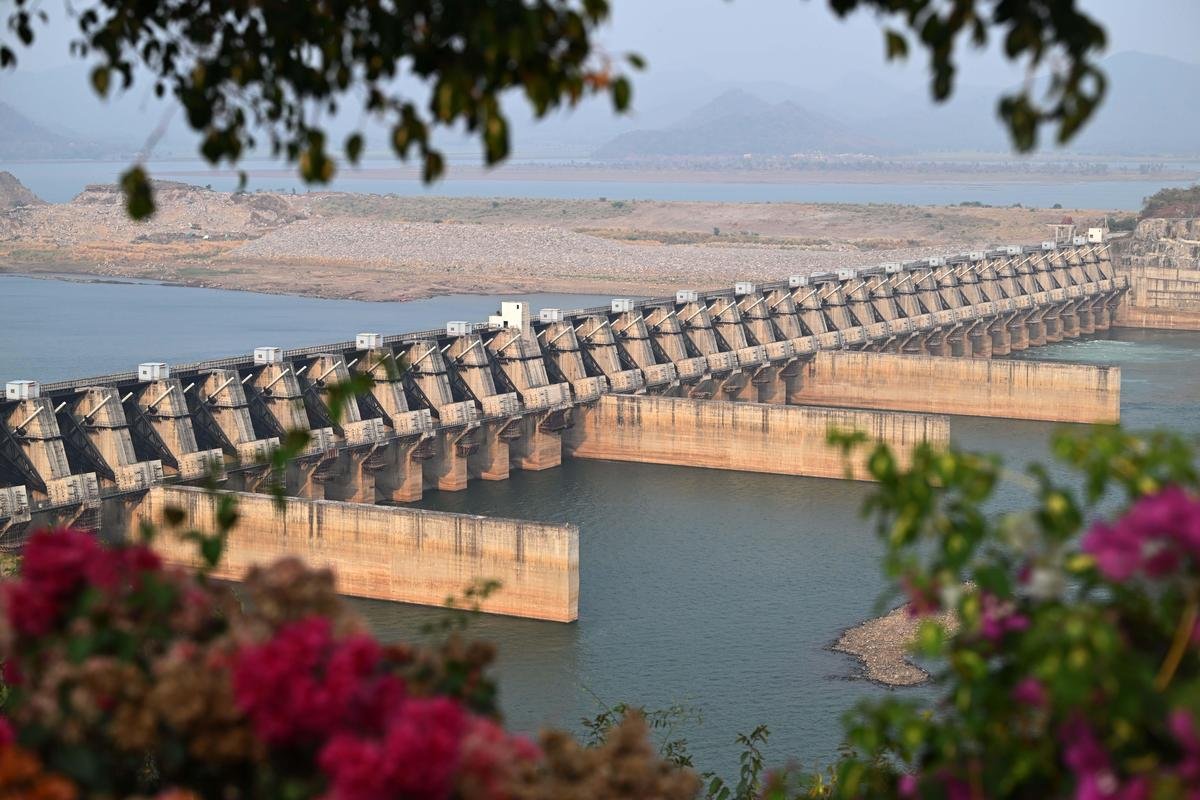
The Telangana government has filed a writ petition in the Supreme Court seeking directions to restrain Andhra Pradesh from preparing a Detailed Project Report (DPR) for the proposed Polavaram Bankacherla Irrigation Project. The petition also seeks to prevent Andhra Pradesh from proceeding with plans to expand the capacity of the Polavaram project amid an ongoing inter-state dispute.
The matter has brought renewed attention to long-standing disagreements between the two states over water sharing and regulatory compliance.
Objection to DPR and Project Expansion
In its petition, Telangana has urged the apex court to direct Andhra Pradesh not to proceed with the DPR or any expansion-related activity linked to the Polavaram project. It has also sought directions restraining regulatory bodies such as the Union Water Ministry and the Central Water Commission (CWC) from evaluating the pre-feasibility report and DPR submitted by Andhra Pradesh.
Telangana argued that such evaluations could eventually lead to clearances, approvals, and funding, which it considers premature and unacceptable given the pending inter-state complaint.
Alleged Violation of Tribunal Awards and Statutory Provisions
The Telangana government has contended that Andhra Pradesh’s proposed expansion violates binding tribunal awards as well as provisions of the Andhra Pradesh State Reorganisation Act. According to the petition, the planned diversion of water and capacity expansion goes beyond what has been permitted under existing approvals.

The state has asserted that such actions undermine established legal and regulatory frameworks governing inter-state river water usage.
Concerns Over Water Diversion and Capacity Enhancement
The petition highlights that Andhra Pradesh had approval to divert 80 tmc ft of water from the Polavaram project to the Krishna river. However, Telangana alleged that Andhra Pradesh was expanding the project infrastructure to carry an additional 200 tmc ft, with plans to further increase the capacity to 300 tmc ft annually.
The proposed diversion, Telangana argued, would take place through canal systems without obtaining mandatory approvals from competent authorities.
Regulatory Process and Tendering Dispute
Telangana has further alleged that Andhra Pradesh undertook project expansion activities even before receiving consent from the CWC. The petition states that despite being advised that a DPR should not be taken up, Andhra Pradesh proceeded to float tenders, complete technical bid processes, and move ahead with financial bids.
Such actions, Telangana contended, amounted to bypassing regulatory scrutiny and statutory safeguards.
Implications for Inter-State Water Governance
The case is expected to have significant implications for inter-state water governance and federal coordination. Observers note that the Supreme Court’s intervention may clarify the extent of regulatory oversight required before large-scale irrigation expansions are undertaken.
The matter remains under judicial consideration, with further hearings likely to determine the future course of the Polavaram Bankacherla project.