


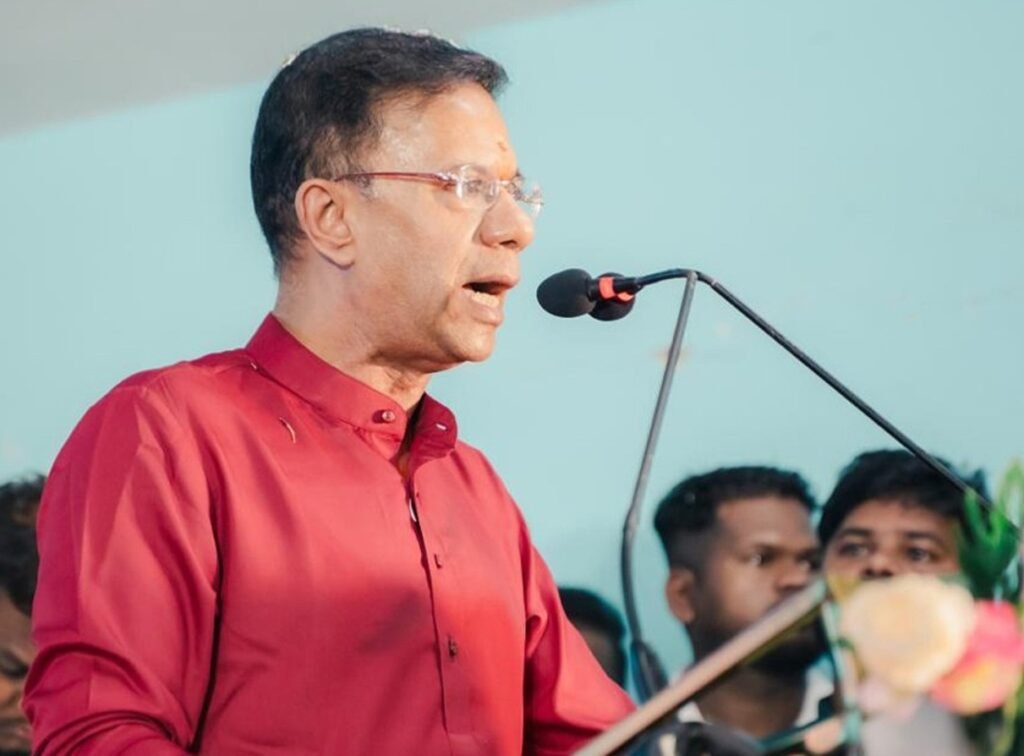
Women’s empowerment continues to be a central pillar in Goa’s social development agenda, and Health Minister Vishwajit Rane has once again emphasised its critical importance. Speaking on the role of women in shaping communities, Rane stated that a “strong woman in a family is the foundation of a strong family,” urging women across the state to actively benefit from the wide range of welfare schemes introduced by both the central and state governments. His remarks have renewed focus on the link between women’s empowerment, social welfare, and sustainable development in Goa.
Women as the Backbone of Societal Strength
Rane’s repeated assertion that strong families depend on empowered women is rooted in the belief that societal progress begins at home. According to him, women’s active participation in education, healthcare, financial decision-making, and community engagement directly contributes to a more resilient and stable society. This perspective aligns with national development frameworks that place women at the centre of welfare policies.
In Goa, where women significantly contribute to the workforce, small enterprises, and household leadership, this message has gained renewed relevance. Rane continues to advocate for greater recognition of women’s roles and the need to strengthen institutional support for their growth.
Encouraging Women to Utilise State and Central Schemes
A major part of Rane’s message focuses on the utilisation of existing government schemes—many of which remain under-accessed due to limited awareness or social constraints. He stressed that schemes designed for dignity, welfare, financial inclusion, and healthcare must reach every eligible woman.
At the state level, Goa has implemented multiple programmes in areas such as maternal health, nutrition, social security, and livelihood support. Nationally, women-centric initiatives such as Beti Bachao Beti Padhao, Ujjwala Yojana, Ayushman Bharat, and self-help group empowerment platforms aim to provide long-term security, improved health, and financial independence.
Rane’s call to action seeks to bridge the gap between policy creation and policy utilisation, ensuring equitable access for women across diverse socio-economic backgrounds.
Health, Dignity, and Security: A Policy Focus
As Health Minister, Rane has consistently addressed the importance of accessible healthcare for women. His statements align with ongoing government efforts to strengthen maternal care, promote preventive health screenings, expand reproductive health services, and improve access to mental health support.
His advocacy also ties into broader conversations around women’s dignity and safety. Government programmes focusing on shelter, legal support, education, skilling, and financial protection play a vital role in creating an ecosystem where women can thrive without fear or dependency.
Rane’s appeal reiterates that women’s dignity is not only a social obligation but also a governance priority.
Building a Future-Ready Goa Through Empowered Women
Rane’s recent remarks highlight a governance model where women are viewed as partners in development rather than passive recipients of welfare. With Goa progressing rapidly in healthcare infrastructure, digital access, and community welfare, women’s participation in these sectors is essential for balanced growth.
By encouraging women to come forward, engage with welfare mechanisms, and take advantage of available schemes, Rane envisions a Goa where every household benefits from improved stability, health, and economic resilience.
His message reinforces the fundamental idea that when women are empowered, families prosper—and when families prosper, the state moves forward.