











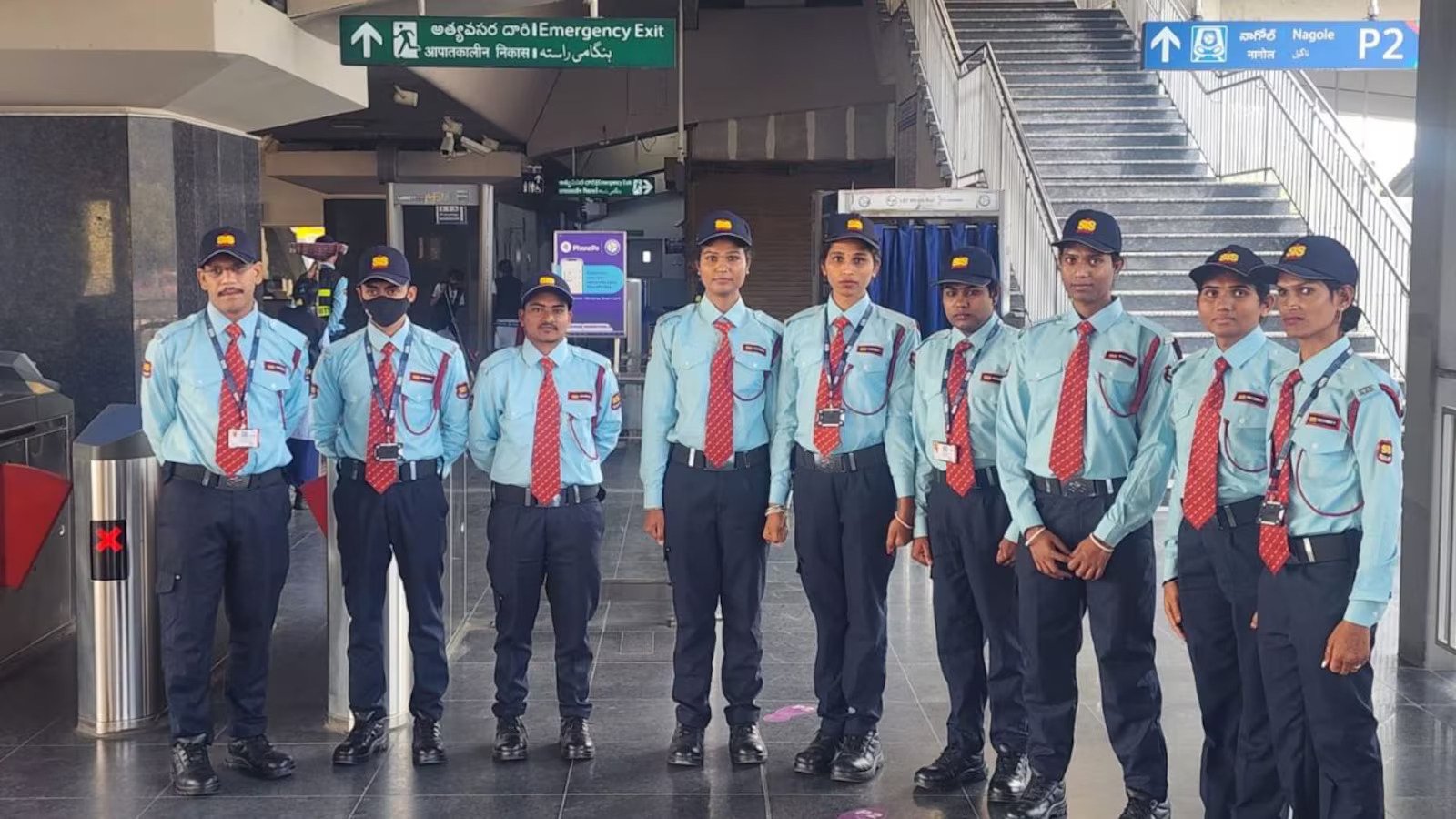
Hyderabad Metro Rail has taken a transformative step toward modern and inclusive public governance by formally deploying twenty transgender personnel as frontline security staff across major metro stations starting December 1. Equipped with comprehensive training in baggage screening procedures, platform surveillance, emergency communication systems, and commuter-support protocols, the newly appointed team will enhance safety services for nearly half-a-million riders who depend on metro travel daily.
A Milestone in Inclusive Public Infrastructure
The initiative marks a significant advancement in creating secure, dignified, and equitable public spaces. Metro officials have stated that women passengers who account for nearly thirty percent of daily ridership stand to benefit from strengthened safety oversight during peak travel hours and late-evening operations. With increasing mobility demands and expanding urban transit routes, the deployment is expected to improve both commuter confidence and operational responsiveness.
The Telangana Government, under Chief Minister A. Revanth Reddy, has emphasized that workforce diversity must translate into real employment and representation not symbolic gestures. The move reflects a governance framework that recognizes gender identity rights as part of broad-based social development and public policy.
Expanding Workforce Inclusion Beyond Traditional Boundaries
The decision builds on earlier steps taken last year, when transgender staff were appointed for traffic management support roles within the city. Officials describe the latest deployment as an extension into more responsibility-bearing and safety-critical roles. Structured training, salaried employment, and direct public interface represent a significant departure from decades of socio-economic exclusion experienced by the transgender community in India.
Public governance observers have noted that this initiative bridges historic employment barriers, providing an opportunity for professional visibility, financial independence, and stable career pathways. By integrating the transgender community into mainstream civic operations, the state signals a shift toward measurable outcomes in inclusion policies.

Enhancing Passenger Safety in High-Footfall Transit Hubs
The newly appointed staff will operate across interchange stations, multi-level terminals, and key routes where rapid passenger movement requires heightened security supervision. Their responsibilities include platform crowd management, monitoring suspicious activity, assisting individuals facing distress, and supporting emergency response procedures. Officials affirm that the decision strengthens real-time surveillance capability and contributes to reducing harassment risks.
Passengers have reportedly responded positively, noting that the presence of inclusive workforce teams fosters an atmosphere of trust, discipline, and civility within crowded commuter zones. The initiative also aligns with broader goals of modernizing India’s transportation safety standards.
Public Policy Perspective: Building Social Confidence Through Opportunity
Policy analysts describe the initiative as a turning point positioning Telangana as a model for socially-conscious governance. By embedding representation into operational structures, the administration moves beyond tokenism and reaffirms that public service roles must reflect the diversity of citizens they serve.
The decision offers a reference framework for other urban transit agencies exploring ways to scale representation and fairness in public employment. With major cities planning network expansions, officials predict growing interest in adopting Hyderabad’s model.
Looking Forward: A Blueprint for National Replication
Hyderabad Metro officials believe that this deployment represents a sustainable governance model capable of influencing nationwide policies. Strengthening public safety while advancing human dignity demonstrates a balanced approach to modern infrastructure development. As India’s cities evolve, inclusive workforce strategies may become essential to building resilient, trustworthy public transport systems.
The initiative stands as a testament to leadership committed to progress where infrastructure development, social equality, and public safety move forward together.