


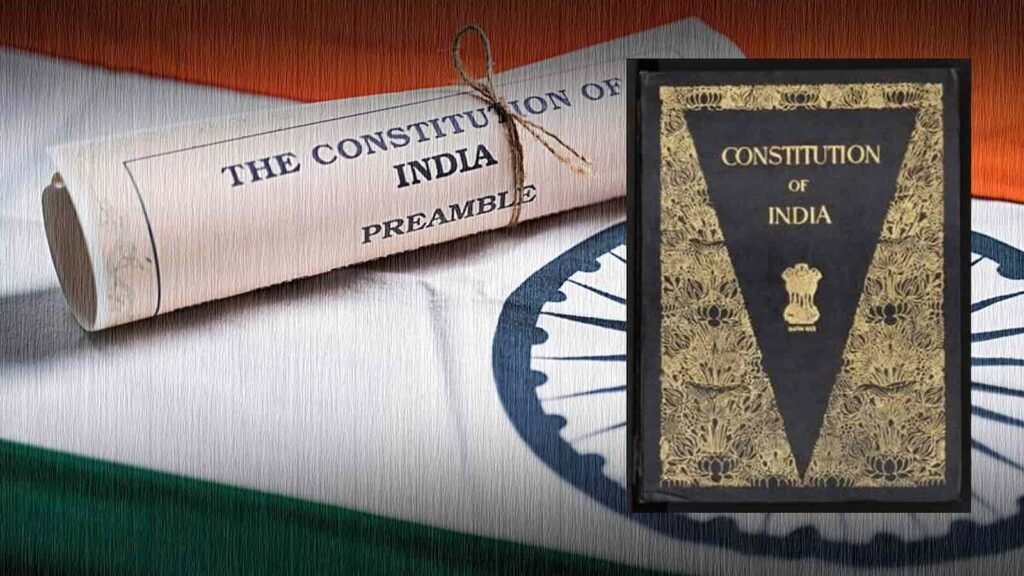
India today commemorates National Constitution Day, observed annually on November 26, marking the historic adoption of the Constitution of India in 1949. The Constitution, which came into effect on January 26, 1950, established India as a sovereign, socialist, secular, democratic republic and continues to serve as the supreme guiding document shaping political governance, public rights, institutional framework, and national direction.
This year’s national ceremony was hosted at Samvidhan Sadan in New Delhi, attended by senior national leaders, parliamentarians, judicial members, and constitutional authorities. The event was organized under the theme “Hamara Samvidhan, Hamara Swabhiman”, highlighting national pride and the shared duty of safeguarding democratic values.
A Legacy Built on Equality, Justice & Fraternity
The Constitution of India is considered one of the most comprehensive and progressive constitutions globally. It lays out fundamental rights, directive principles of state policy, judicial independence, and democratic processes that shape every aspect of governance and public life.
At the heart of the celebration is a tribute to Dr. B.R. Ambedkar, Chairman of the Drafting Committee, recognized nationally and internationally as the chief architect of modern India. His leadership ensured the inclusion of guarantees for social justice, liberty, dignity, equal opportunity, and minority protections, establishing a democratic foundation built on fairness and inclusiveness.
During today’s ceremony, leaders emphasized that the Constitution is not only a legal framework but also a moral and social contract that binds 1.4 billion citizens under a vision of equality and unity.
National Leaders Reaffirm Commitment to Democratic Ideals
This year’s National Constitution Day saw renewed commitment from leadership across party lines. Senior government representatives and public figures emphasized the need to preserve constitutional values amid global geopolitical uncertainty, domestic development goals, and increasingly complex socio-economic challenges.
Speakers reiterated that true respect for the Constitution lies not only in ceremonial acknowledgement, but in active responsibility toward its implementation—protecting rights, fulfilling duties, and upholding the rule of law.
Institutions including the Parliament, Supreme Court, and state legislatures organized educational and commemorative activities, reinforcing the need to strengthen transparency, accountability, and public welfare.
Educational Initiatives and Public Participation Nationwide
Across India, universities, schools, civic organizations, and judicial academies held programs such as:
- Preamble reading ceremonies
- Seminars and panel discussions on constitutional values
- Law awareness workshops
- Public exhibitions on Ambedkar’s contribution
- Youth debates on democracy and governance
These initiatives focused especially on increasing constitutional awareness among young citizens, reinforcing their role in safeguarding national integrity and democratic participation.
Relevance of Constitution Day in Today’s India
The observance gains stronger significance today as India continues to evolve socially, politically, and economically. Leaders highlighted that constitutional values must guide national growth—shaping policies on development, public welfare, rights protection, and social harmony.
National discussions emphasized:
- Strengthening unity in diversity
- Protecting fundamental rights and democratic expression
- Enhancing judicial accessibility and equality before law
- Encouraging informed citizenship and civic responsibility
- Building trust between institutions and the public
The Constitution is viewed as a living document—adaptable through amendments, judicial interpretation, and democratic debate.
Tribute to Dr. B.R. Ambedkar and the Drafting Committee
The article pays significant respect to Dr. Ambedkar and the drafting members who worked tirelessly from 1946–1949. Ambedkar’s vision centered around:
- Social justice and eradication of discrimination
- Economic democracy with equal opportunities
- Institutional checks on power
- Equality before law and constitutional morality
His dedication ensured that marginalized voices received legal recognition and protection for the first time in history.
A National Call to Protect Democratic Values
As the nation commemorates National Constitution Day, Indian leaders urged citizens to actively uphold Constitutional duties and strengthen democratic participation. Today’s observance serves as a reminder that democracy thrives not only on rights, but also on responsibility, harmony, and collective commitment.
The message emphasized that the Constitution belongs to every citizen, and its protection depends on national unity and respect for justice, liberty, equality, and fraternity.